

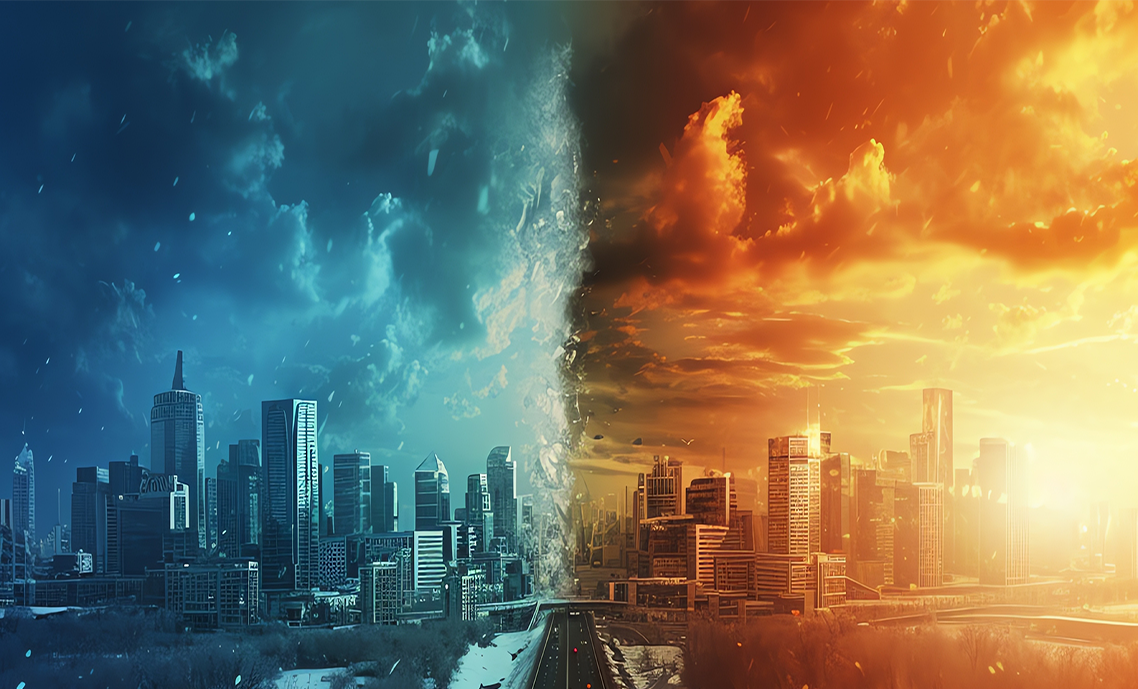
Hot Brackets, Cold Regrets
Thermal stress is a critical but often overlooked threat to mounting integrity. In rooftop, industrial, and heat-intensive environments, support hardware is exposed to constant temperature fluctuations that can deform brackets, loosen fasteners, degrade adhesives, and accelerate corrosion. Installers must evaluate thermal resilience before deployment to prevent long-term fatigue, inspection failure, or structural compromise.
This FAQ is intended to help installers recognize thermal risks, assess component resilience, and make informed decisions when deploying support hardware in temperature-sensitive environments.
Fundamentals
1. What is thermal impact?
Thermal impact refers to the physical and mechanical changes that occur in support hardware when exposed to fluctuating or extreme temperatures. These changes include expansion, contraction, differential movement between materials, material fatigue, adhesive degradation, creep deformation, and accelerated corrosion. Without thermal resilience, mounting components may deform, loosen, or fail—especially in exposed or enclosed heat zones.
2. Why does thermal impact matter in support systems?
Support hardware is often deployed in environments where temperature shifts are constant and severe. If components aren’t rated for thermal exposure, they can lose grip, warp under stress, or degrade prematurely. This compromises mounting integrity, risks cable damage, and may trigger inspection failure or system downtime. NEC 110.3(B) reinforces this by requiring all support hardware to be installed in accordance with manufacturer temperature ratings and environmental limits.
Environments & Exposure
1. Where is thermal impact most relevant?
Thermal stress affects mounting systems in rooftop installations, attics, plenums, industrial heat zones, mechanical rooms, mobile equipment, parking structures, and enclosed spaces with poor ventilation. In these zones, thermal cycling is constant, and support hardware must be rated accordingly.
2. How does thermal expansion affect mounting components?
Expansion and contraction cycles can stretch mounting holes, deform brackets, loosen fasteners, introduce stress fractures in brittle materials, cause misalignment in rigid raceways, and trigger creep deformation in plastics under sustained load. Vibration combined with thermal cycling can accelerate fastener back‑out and structural fatigue.
Materials & Ratings
1. Which materials are most vulnerable to thermal degradation?
Materials that fail under thermal stress include low‑grade plastics that soften or crack, PVC that deforms under heat, rubber components that dry out or split, untreated metals that warp or corrode, zinc‑plated steel with coating breakdown, and adhesives that creep, peel, or lose bond strength. These vulnerabilities are magnified in rooftop, industrial, and mobile environments.
2. What should installers look for in thermally resilient components?
Thermally rated support hardware includes documented temperature thresholds (continuous and intermittent), high‑temperature polymers, stainless steel or coated metals, UV‑resistant materials, and expansion‑tolerant designs such as slotted holes, flexible joints, and isolators. Installers must confirm these attributes in spec sheets—not rely on visual cues or assumed durability.
3. How do temperature ratings translate to real‑world conditions?
Temperature ratings reflect controlled test conditions, not field extremes. Surface temperatures may exceed ambient values, enclosures can trap heat, direct sunlight can elevate component temperature far above air temperature, and intermittent spikes may exceed continuous ratings. Installers must match ratings to actual exposure, not nominal environment labels.
4. How does differential expansion affect mixed-material mounting systems?
Different materials expand and contract at different rates. When steel brackets, aluminum rails, plastic clips, adhesives, and rubber isolators are combined, thermal cycling can cause shear stress, loosening, cracking, or bond failure. Mixed‑material systems require isolators, flexible joints, or slotted mounting to accommodate movement.
Mitigation & Best Practices
1. How can thermal impact be mitigated during installation?
Mitigation strategies include using components rated for the expected temperature range, avoiding over‑tightening in heat zones, allowing for movement via flexible mounting systems, isolating dissimilar materials, using torque‑controlled fastening, and avoiding adhesive‑only mounts in thermally active environments. Thermal failure is preventable when scoped during planning and deployment.
2. What UL standards apply to thermal performance in support hardware?
Relevant standards include UL 94 for flammability of plastic materials, UL 2442 for polymeric mounting systems, UL temperature ratings commonly scoped at 60°C, 75°C, or 90°C, UL 746C for polymeric materials in outdoor environments, ASTM D638 for tensile properties of plastics, and ASTM B117 for corrosion resistance under heat and humidity. Installers must verify UL and ASTM compliance for thermal zones—not just general‑use environments.
Failure Modes
1. What are the most common failure modes caused by thermal stress?
Thermal cycling refers to repeated heating and cooling of support hardware over time. These temperature swings cause expansion, contraction, mechanical fatigue, creep deformation, adhesive breakdown, fastener loosening, bracket deformation, stress fractures, and UV‑accelerated material degradation. These failures compromise mounting integrity and may result in inspection failure, liability exposure, or emergency repair.
Thermal resilience should be treated as a core specification—not an afterthought—when selecting and installing support hardware in environments subject to temperature stress.
The information provided in this FAQ is for general informational purposes only and is not intended to replace official codes, standards, or project specifications. Winnie Industries products must always be installed and used in accordance with our product instruction sheets or designated training. Products should never be applied beyond their intended purpose or in a manner that exceeds specified load ratings. Proper fastening is critical to system integrity and functionality, requiring secure attachment to structurally sound components capable of supporting imposed loads. All installations must comply with governing codes, regulations, and job site requirements. Always consult your Authority Having Jurisdiction (AHJ) for specific regulatory guidance.