

From Roof to Room
Renewable energy systems are reshaping how buildings are designed, wired, and inspected. From rooftop solar and battery storage to geothermal loops and smart inverters, every component affects infrastructure layout, trade coordination, and code compliance. These technologies don’t just bolt on—they redefine conduit paths, labeling logic, shutdown protocols, and inspection workflows. Structural loads shift. Electrical rooms expand. Fire code requirements evolve. And every trade—from mechanical to limited energy—has a role to play in getting systems approved and operational.
The guidance below is built for deployment—focused on what installers, designers, and inspectors actually need to know to get systems approved, commissioned, and future-ready.
System Selection & Layout Impact
1. How do renewable systems affect building layout?
Renewable technologies reshape how buildings are wired, ventilated, and coordinated across trades. Electrical rooms expand, conduit paths multiply, roof penetrations increase, and structural loads shift. Fire code requirements, battery safety rules, and waterproofing details must be addressed early to avoid redesigns and failed inspections.
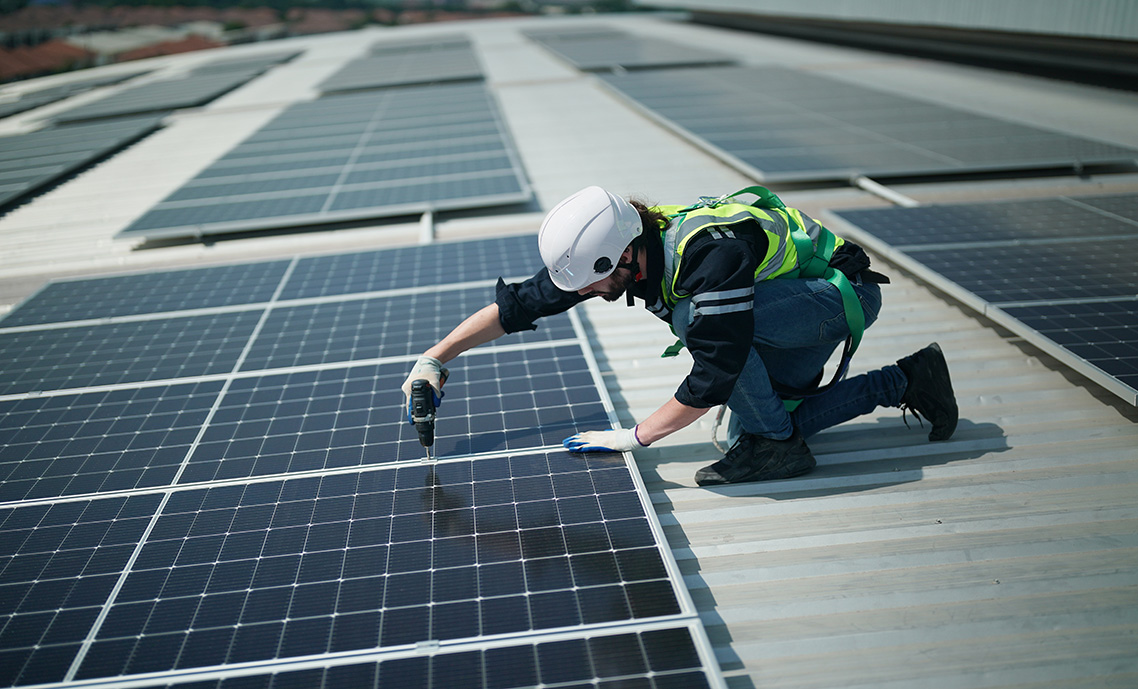
- Solar arrays – Require roof space, structural anchoring, flashing, wind uplift considerations, and conduit paths to inverters.
- Battery systems – Require NFPA 855/IFC‑compliant rooms with ventilation, fire rating, gas detection (where required), and access clearance.
- Geothermal loops – Affect trenching, slab layout, and mechanical coordination.
- EV charging – Drives conduit sizing, panel upgrades, and parking layout changes.
Every system choice affects layout, and every layout decision affects coordination. Plan accordingly.
2. What should be considered when sizing electrical rooms?
Electrical rooms now house inverters, batteries, disconnects, and control gear. Sizing must account for clearance, ventilation, fire code requirements, and future expansion. Battery rooms must meet NFPA 855/IFC separation, suppression, and ventilation rules.
- Leave space for additional inverters or battery cabinets.
- Ensure working clearance per NEC 110.26 and local amendments.
- Include wall space for labeling, conduit routing, and fire suppression gear.
- Plan for future grid services, export upgrades, and utility‑mandated disconnects.
Undersized rooms lead to reroutes, delays, and failed inspections. Oversize early and coordinate with all trades.
Cabling & Labeling
1. How is limited energy cabling managed in renewable deployments?
Limited energy cabling—used for monitoring, control, and communication—requires clean routing and separation from power conductors. Proper routing protects signal integrity, simplifies service, and supports inspection approval.
- J hook – For structured cabling in open ceilings.
- Bridle rings – For lightweight routing in open spaces.
- Cable trays – For long horizontal runs; must be bonded.
- Conduit – Required in fire‑rated or high‑risk zones.
- Magnetic cable managers – Fast to deploy, easy to reposition, ideal for LE cabling runs.
Clean routing isn’t just about aesthetics—it’s about performance, serviceability, and code compliance.
2. What labeling practices support inspection and service?
Labeling is essential for inspection, safety, and long‑term service. Labels must be durable, consistent, and clear across all trades.
- Use UV‑rated labels for outdoor gear and conduit.
- Color‑code AC, DC, and comms where possible.
- Include voltage, source, and destination on all disconnects.
- Label both ends of every control and comms cable.
Good labeling earns trust with inspectors and saves hours during troubleshooting.
Inspection Logic
1. What do inspectors look for in renewable deployments?
Inspectors verify safety, coordination, and code compliance across multiple systems. Understanding their logic prevents delays and rework.
- Clear labeling – Voltage, source, and destination must be obvious.
- Bonding and grounding – PV equipment grounding, DC bonding, battery rack bonding, and grounding electrode upgrades must be continuous and code‑compliant.
- Conduit fill and support – No overfill, no sagging, no shortcuts.
- Rapid shutdown compliance – NEC 690.12 device placement, labeling, and roof‑to‑disconnect coordination.
- Shutdown protocols – Fire suppression, disconnects, and inverter shutdown must be coordinated.
- Access and clearance – Panels, batteries, and inverters must be accessible per code.
Every trade affects inspection outcomes. Coordination is key.
2. How can teams prepare for final inspection?
Final inspection is the last checkpoint before commissioning. Preparation means verifying every system, label, and coordination point.
- Walk the site with the latest one‑line and layout drawings.
- Verify labeling, conduit routing, grounding, and clearance.
- Test shutdown triggers, rapid shutdown, and monitoring systems.
- Coordinate with fire and AHJ teams if required.
Final inspection reflects how well the system was built.
Trade Coordination
1. Which trades are involved in renewable system deployment?
Renewable systems touch electrical, mechanical, limited energy, structural, and civil trades. Coordination prevents clashes, delays, and inspection failures.
- Electrical – Panels, conduit, inverters, disconnects, grounding.
- Mechanical – Ventilation, fire suppression, battery room HVAC.
- Limited energy – Monitoring, control, BMS, comms.
- Structural – Roof loading, anchoring, seismic bracing.
- Civil – Trenching, EV charging, geothermal loops.
Every trade has a role—and every role affects system performance and approval.
2. How should trades coordinate during layout and install?
Coordination starts with drawings and ends with clean installs. It’s the backbone of successful deployment.
- Use shared drawings with conduit paths, gear locations, and clearance zones.
- Hold pre‑install meetings to align on routing and sequencing.
- Flag conflicts early—especially in tight electrical rooms.
- Document changes and share updates across teams.
Coordination isn’t overhead—it’s how systems get built right the first time.
Innovation & Futureproofing
1. What innovations are shaping renewable infrastructure?
Deployment is getting faster, smarter, and more modular. Innovations in cabling, layout tools, and system integration are reshaping how renewable systems are installed and maintained.
- Color‑coded trays – Separate AC, DC, and comms visually for faster routing and easier inspection.
- Pre‑terminated harnesses – Reduce wiring errors and speed installation.
- Plug‑and‑play connectors – Simplify commissioning and service.
- Shielded control bundles – Support BMS, fire suppression, and inverter coordination.
- AI‑driven layout tools – Optimize conduit paths, cable sizing, and voltage drop.
These innovations are already appearing on job sites and changing how systems get built.
2. How can systems be designed for future expansion or grid services?
Futureproofing requires designing systems that scale, adapt, and support grid interaction. Utility interconnection requirements must be considered early.
- Oversize conduit and trays for future cable pulls.
- Leave space in electrical rooms for additional inverters or battery cabinets.
- Use smart inverters that support reactive power control and remote disconnect.
- Design monitoring platforms with modular data inputs.
- Coordinate with utilities on interconnection timelines, meter upgrades, and anti‑islanding requirements.
Designing for tomorrow reduces retrofits and keeps systems relevant.
3. What role do smart inverters and BMS platforms play in system coordination?
Smart inverters and BMS platforms form the control layer of renewable deployments. They manage grid interaction, monitor system health, and trigger safety protocols.
- Smart inverters – Support reactive power control, remote disconnect, and grid services.
- BMS platforms – Monitor battery health, temperature, and charge cycles; trigger alarms and shutdowns.
- Shielded cabling – Required for clean signal routing.
- Dedicated conduit paths – Prevent interference and simplify troubleshooting.
- Commissioning coordination – Requires electrical, LE, and software teams to align.
These systems are core infrastructure and must be integrated from day one.
4. How can renewable systems support demand response and grid flexibility?
Modern renewable systems can respond to grid signals, shift loads, and support resilience. Designing for demand response requires smart controls and utility coordination.
- Smart inverters – Adjust output based on grid frequency or voltage.
- Battery systems – Store excess energy and discharge during peak demand.
- Load shedding protocols – Prioritize critical loads.
- Utility APIs – Enable real‑time coordination.
- Time‑of‑use programming – Optimize behavior based on rate schedules.
Grid flexibility is a deployment strategy that starts with smart design.
5. What does futureproofing look like for commercial-scale renewable systems?
Futureproofing means designing systems that scale, adapt, and stay serviceable as technology evolves.
- Oversized conduit and trays – Support future additions.
- Modular inverter racks – Enable phased deployment.
- Flexible monitoring platforms – Accept new data inputs.
- Clear documentation – Supports future service teams.
- Utility coordination – Supports export upgrades and DER participation.
The best systems are built for today and ready for what’s next.
6. What are common pitfalls in renewable infrastructure deployment?
Even well‑designed systems can fail if coordination breaks down. Avoiding common pitfalls means anticipating layout conflicts, documentation gaps, and trade misalignment.
- Undersized electrical rooms – No space for expansion or safe clearance.
- Missing LE coordination – Causes signal interference and failed commissioning.
- Poor labeling – Slows inspection and complicates service calls.
- Unplanned conduit paths – Clash with HVAC, structural, or fire systems.
- Late‑stage design changes – Trigger rework and delay approvals.
Deployment success depends on early coordination and field‑smart execution.
7. What documentation should be provided at project closeout?
Closeout is the final handoff that enables service, upgrades, and compliance. Documentation must be complete, accurate, and usable.
- As‑built drawings – Reflect actual conduit paths, gear locations, and cable routing.
- Labeling index – Maps every label to its source and destination.
- Commissioning report – Includes test results, shutdown verification, and system performance.
- Manufacturer documentation – Manuals, warranties, and service protocols.
- Contact directory – Lists responsible trades, vendors, and support contacts.
Good documentation is a legacy of how well the system was built.
Renewable systems should be built to perform from day one—and stay ready for whatever comes next.
The information provided in this FAQ is for general informational purposes only and is not intended to replace official codes, standards, or project specifications. Winnie Industries products must always be installed and used in accordance with our product instruction sheets or designated training. Products should never be applied beyond their intended purpose or in a manner that exceeds specified load ratings. Proper fastening is critical to system integrity and functionality, requiring secure attachment to structurally sound components capable of supporting imposed loads. All installations must comply with governing codes, regulations, and job site requirements. Always consult your Authority Having Jurisdiction (AHJ) for specific regulatory guidance.