

Torque, Tension, and the Threads Between
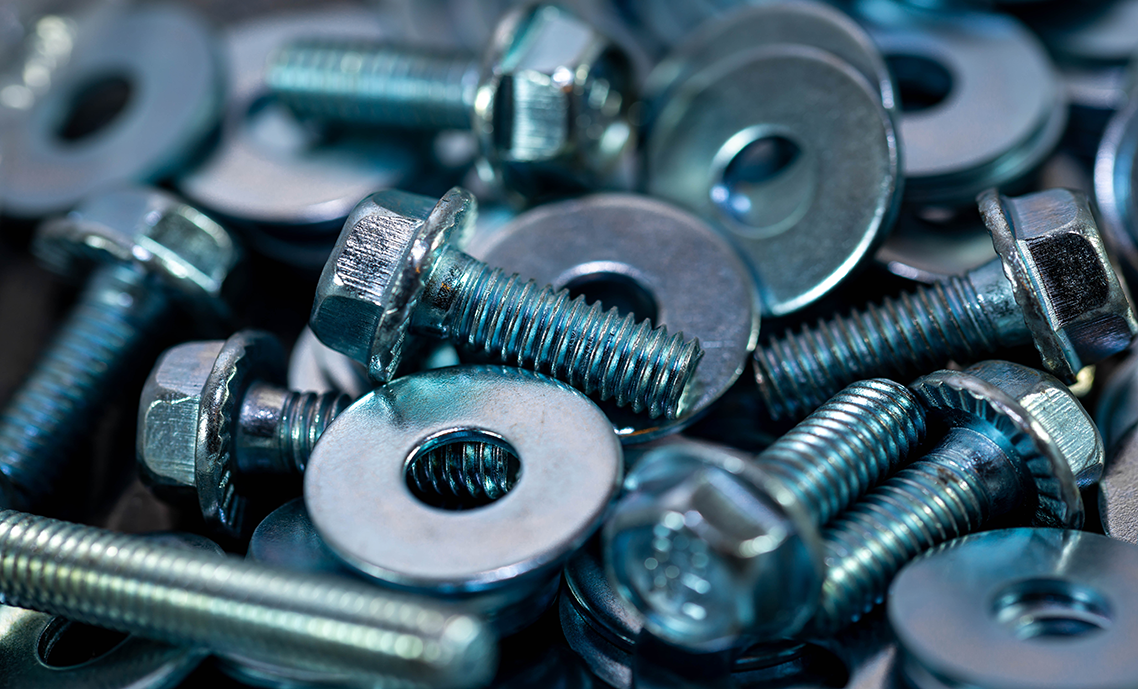
Nuts and bolts are the mechanical handshake of modern construction—simple, reliable, and everywhere. Their job is to clamp components together with precision, resisting tension, shear, and vibration across everything from bridges and buildings to bikes and data racks. While their origins trace back centuries, it’s their universal logic—threaded engagement, torque-driven clamping, and modular interchangeability—that makes them indispensable. Whether anchoring a steel beam or securing a circuit board, they embody the quiet strength behind engineered systems.
This guide breaks down the most common nuts, bolts, washers, and anchors—clarifying their purpose, installation method, and failure risks—so specifiers, contractors, and inspectors can choose with confidence and deploy without second-guessing.
Hardware Fastener FAQ
1. What’s the difference between a screw and a bolt?
A screw is typically driven into a material to form its own threads or engage a pre-tapped hole. A bolt is inserted through a hole and secured with a nut. Screws are often used for direct fastening; bolts are used for clamping assemblies.
2. When should I use a washer?
Washers distribute load, prevent surface damage, and reduce loosening. Use flat washers under bolt heads or nuts, lock washers in vibration zones, and fender washers for soft or oversized holes.
3. What does “thread pitch” mean?
Thread pitch is the distance between threads. Coarse threads are better for soft materials and quick assembly. Fine threads offer better tension control and are used in precision or high-vibration applications.
4. What’s the most common finish for fasteners?
Fastener finishes affect corrosion resistance, conductivity, appearance, and compatibility with surrounding materials. Selection depends on environment, substrate, and regulatory requirements. Common finishes include:
- Zinc-plated – General indoor use; mild corrosion resistance; bright or clear appearance
- Hot-dip galvanized – Heavy-duty outdoor use; thick zinc layer for structural steel and wood-to-concrete connections
- Black oxide – Machinery and aesthetic applications; minimal corrosion resistance; often used indoors
- Stainless steel – High corrosion resistance; ideal for sanitary, marine, and outdoor environments
- Phosphate-coated – Used on drywall and self-tapping screws; improves paint adhesion and lubricity
- Cadmium-plated – Aerospace and marine use; excellent corrosion resistance and conductivity; restricted by RoHS
- Nickel-plated – Decorative and electrical applications; smooth finish with moderate corrosion resistance
- Chrome-plated – Decorative hardware; high polish and abrasion resistance; used in furniture and automotive trim
- Mechanical galvanizing – Uniform zinc coating for threaded parts; avoids hydrogen embrittlement common in hot-dip processes
5. How do I choose the right fastener?
Choosing the right fastener means matching its mechanical function, material compatibility, and installation method to the demands of the application. Key selection factors include:
- Material: Match the fastener to the substrate—wood, metal, plastic, or masonry—to ensure proper thread engagement and avoid splitting or corrosion
- Load: Identify the type of force—static, dynamic, shear, or tension—and select a fastener rated to resist it without deformation or pull-out
- Environment: Use finishes and materials suited to the location—indoor, outdoor, corrosive, or sanitary—to prevent rust, fatigue, or chemical degradation
- Access: Determine if the joint is accessible from one side (use screws) or requires clamping through a hole (use bolt and nut assemblies)
6. What causes fastener failure?
Fastener failure occurs when the mechanical or environmental demands exceed the fastener’s capacity, or when installation or material choices introduce hidden risks. Common causes include:
- Over- or under-tightening – Excess torque can stretch or shear fasteners; under-torque leads to joint loosening and movement
- Galvanic corrosion – Dissimilar metals in contact (e.g., stainless bolt in aluminum) create electrochemical reactions that degrade material
- Thread stripping – Occurs when threads are overdriven, misaligned, or cut into soft or undersized substrates
- Vibration loosening – Repeated motion can back off nuts or screws unless locking features (e.g., lock washers, threadlocker) are used
- Incompatible finishes or materials – Using indoor-rated finishes outdoors, or mismatched coatings, can accelerate rust, fatigue, or joint failure
7. Are fasteners standardized?
Yes. Fastener standards define the material, strength, dimensions, and environmental compliance required for safe and consistent use across industries. These standards apply when:
- Project specifications or building codes require certified fasteners
- Assemblies involve structural, mechanical, or electrical components
- Environmental or international compliance is necessary
Common standards include:
- ASTM – Defines material properties, coatings, and mechanical performance for structural and industrial fasteners
- SAE – Classifies fasteners by strength grade (e.g., Grade 2, 5, 8) for automotive and mechanical use
- ISO – Specifies metric dimensions, thread pitch, and tolerances for global compatibility
- RoHS – Restricts hazardous substances (e.g., lead, cadmium) in fasteners used in electronics and green building
Screws
Wood Screw
A tapered, coarse-threaded fastener designed to bite into wood without the need for a nut. Typically features a flat or oval head for flush or decorative finishes.
Common Use: Framing, cabinetry, trim installation
Finish: Zinc-plated, brass, black oxide
Installation Method: Driven with screwdriver or drill; pilot hole recommended in hardwood
Load Type / Force Resistance: Moderate shear and pull-out resistance
Thread Type / Engagement: Coarse thread; partial thread for clamping
Failure Mode / Risk Flags: Splitting in hardwood, thread strip-out if overdriven
Substrate Compatibility: Wood, plywood, MDF
Machine Screw
A uniform-threaded fastener used with tapped holes or nuts. Available in multiple head styles and drive types for metal-to-metal or metal-to-plastic fastening.
Common Use: Electrical enclosures, metal panels, junction boxes
Finish: Zinc-plated, stainless steel, black oxide
Installation Method: Inserted into tapped hole or through-hole with nut; torque-controlled
Load Type / Force Resistance: High tensile and shear when paired with nut
Thread Type / Engagement: Fine or standard machine thread; full engagement required
Failure Mode / Risk Flags: Cross-threading, loosening under vibration
Substrate Compatibility: Metal, plastic, composite
Sheet Metal Screw
A sharp-pointed, self-tapping fastener designed to pierce and secure thin metal or plastic. Often used in HVAC and appliance assembly.
Common Use: HVAC ductwork, appliance assembly
Finish: Zinc-plated, stainless steel
Installation Method: Driven directly into thin metal or plastic; may self-tap
Load Type / Force Resistance: Light to moderate shear; limited tensile
Thread Type / Engagement: Sharp, self-tapping thread; partial or full
Failure Mode / Risk Flags: Strip-out in thin gauge, over-tightening deformation
Substrate Compatibility: Sheet metal, plastic housings
Self-Tapping Screw
A hardened fastener that forms its own mating threads as it drives into metal, plastic, or composite materials. Eliminates the need for pre-threading.
Common Use: Electrical boxes, conduit straps, metal framing
Finish: Zinc-plated, case-hardened
Installation Method: Driven with drill or impact driver; no pre-threading required
Load Type / Force Resistance: Moderate shear and vibration resistance
Thread Type / Engagement: Thread-cutting or thread-forming; full engagement critical
Failure Mode / Risk Flags: Thread collapse in brittle substrates, overtightening
Substrate Compatibility: Metal, plastic, composite
Drywall Screw
A bugle-headed fastener designed for securing gypsum board to wood or metal studs. Typically features a sharp point and fine or coarse thread.
Common Use: Drywall-to-stud fastening
Finish: Black phosphate
Installation Method: Driven with drywall bit; no pilot hole needed
Load Type / Force Resistance: Light shear; minimal pull-out resistance
Thread Type / Engagement: Coarse thread for wood studs, fine for metal
Failure Mode / Risk Flags: Paper tear-out, overdrive crater
Substrate Compatibility: Gypsum board, wood studs, metal studs
Pan Head Screw
A rounded, low-profile screw with a flat bearing surface under the head. Common in electrical and appliance applications where flush mounting is not required.
Common Use: Electrical boxes, appliance panels, metal brackets
Finish: Zinc-plated, stainless steel, black oxide
Installation Method: Driven with Phillips or Torx driver; flush or surface-mounted
Load Type / Force Resistance: Light to moderate shear; low pull-through risk
Thread Type / Engagement: Machine or self-tapping thread; full engagement preferred
Failure Mode / Risk Flags: Head stripping, thread mismatch
Substrate Compatibility: Metal, plastic, composite
Truss Head Screw
A wide, low-profile screw head designed to maximize surface coverage and reduce pull-through. Often used in HVAC and light-gauge sheet metal.
Common Use: HVAC duct covers, light-gauge sheet metal, plastic panels
Finish: Zinc-plated, stainless steel
Installation Method: Driven with Phillips or square driver; surface-mounted
Load Type / Force Resistance: Light shear; high surface coverage
Thread Type / Engagement: Coarse or self-tapping thread
Failure Mode / Risk Flags: Head deformation, pull-through in soft materials
Substrate Compatibility: Sheet metal, plastic, composite
Socket Head Cap Screw
A high-strength fastener with a cylindrical head and internal hex drive. Used in precision assemblies where space is limited and torque control is critical.
Common Use: Machinery, robotics, automotive assemblies
Finish: Black oxide, stainless steel, alloy steel
Installation Method: Driven with Allen wrench; torque-controlled
Load Type / Force Resistance: High tensile and shear
Thread Type / Engagement: Fine or standard machine thread; full engagement required
Failure Mode / Risk Flags: Thread galling, over-torque fracture
Substrate Compatibility: Metal, composite
Set Screw (Grub Screw)
A headless screw used to secure one object within or against another. Common in rotating assemblies and shaft retention.
Common Use: Shaft collars, pulleys, knobs, gear retention
Finish: Black oxide, stainless steel
Installation Method: Driven with Allen wrench; recessed installation
Load Type / Force Resistance: Axial retention; light shear
Thread Type / Engagement: Fine thread; full engagement required
Failure Mode / Risk Flags: Loosening under vibration, thread wear
Substrate Compatibility: Metal, composite
Thread-Cutting Screw
A self-tapping screw that removes material to form threads in pre-drilled holes. Ideal for plastics and thin metals.
Common Use: Plastic housings, light-gauge metal, electrical enclosures
Finish: Zinc-plated, stainless steel
Installation Method: Driven with drill or screwdriver; requires pilot hole
Load Type / Force Resistance: Moderate shear and pull-out
Thread Type / Engagement: Thread-cutting; full engagement required
Failure Mode / Risk Flags: Material cracking, thread collapse
Substrate Compatibility: Plastic, metal, composite
Roofing Screw
A self-drilling screw with a hex washer head and bonded sealing washer. Designed to create a watertight seal in roofing and siding applications.
Common Use: Metal roofing panels, siding, outdoor enclosures
Finish: Zinc-plated, ceramic-coated, stainless steel
Installation Method: Driven with hex driver; sealing washer compresses under head
Load Type / Force Resistance: Moderate shear; high leak resistance
Thread Type / Engagement: Self-drilling or self-tapping; full engagement preferred
Failure Mode / Risk Flags: Seal degradation, overdrive crushing washer
Substrate Compatibility: Metal panels, wood purlins, composite roofing
Deck Screw
A corrosion-resistant screw designed for outdoor wood-to-wood fastening. Typically features a bugle head and coarse thread for treated lumber.
Common Use: Deck boards, railing systems, outdoor wood structures
Finish: Ceramic-coated, stainless steel
Installation Method: Driven with square or Torx bit; pilot hole optional in hardwood
Load Type / Force Resistance: Moderate shear and pull-out resistance
Thread Type / Engagement: Coarse thread; partial or full depending on length
Failure Mode / Risk Flags: Head snapping, thread strip-out in dense wood
Substrate Compatibility: Pressure-treated lumber, cedar, composite decking
Bolts
Hex Bolt
A six-sided head bolt used for structural and mechanical fastening. Common in steel framing and machinery where high clamping force is required.
Common Use: Steel framing, machinery, anchor plates
Finish: Hot-dip galvanized, zinc-plated, stainless steel
Installation Method: Inserted through pre-drilled hole; tightened with wrench or impact driver
Load Type / Force Resistance: High tensile and shear resistance
Thread Type / Engagement: Coarse or fine thread; full engagement with nut required
Failure Mode / Risk Flags: Over-tightening, thread galling, corrosion mismatch
Substrate Compatibility: Steel, wood, concrete (with anchors)
Carriage Bolt
A rounded head bolt with a square neck that locks into wood to prevent rotation. Used in wood-to-wood or wood-to-metal fastening.
Common Use: Decking, fence posts, playground equipment
Finish: Zinc-plated, galvanized
Installation Method: Inserted into pre-drilled hole; square neck locks into wood
Load Type / Force Resistance: Moderate shear and pull-through resistance
Thread Type / Engagement: Coarse thread; nut required
Failure Mode / Risk Flags: Neck spin-out, pull-through in soft wood
Substrate Compatibility: Wood, composite, metal (with washer)
Lag Bolt
A heavy-duty wood fastener with a hex head, designed for high-load structural applications. Often used without a nut.
Common Use: Ledger boards, heavy timber, structural wood joints
Finish: Hot-dip galvanized, zinc-plated
Installation Method: Driven into wood with wrench; pilot hole recommended
Load Type / Force Resistance: High pull-out and shear resistance
Thread Type / Engagement: Coarse thread; partial or full depending on length
Failure Mode / Risk Flags: Wood splitting, thread strip-out
Substrate Compatibility: Wood, masonry (with shield anchor)
Eye Bolt
A bolt with a looped head used for lifting, anchoring, or suspending loads. Available in open or closed eye styles.
Common Use: Rigging, cable suspension, tie-downs
Finish: Galvanized, stainless steel
Installation Method: Inserted through hole; secured with nut or embedded in concrete
Load Type / Force Resistance: Tension and axial load bearing
Thread Type / Engagement: Coarse or machine thread; full engagement required
Failure Mode / Risk Flags: Bending under side load, thread pull-out
Substrate Compatibility: Wood, metal, concrete (with anchor)
U-Bolt
A U-shaped bolt used to secure pipe, conduit, or round objects to a surface. Typically includes two nuts and washers.
Common Use: Pipe hangers, cable trays, exhaust systems
Finish: Zinc-plated, galvanized
Installation Method: Inserted around pipe; secured with nuts and washers
Load Type / Force Resistance: Clamp force and vibration resistance
Thread Type / Engagement: Machine thread; nut required
Failure Mode / Risk Flags: Thread loosening, deformation under load
Substrate Compatibility: Pipe, conduit, round bar, structural steel
Flange Bolt
A bolt with an integrated washer-like flange under the head to distribute load and resist loosening. Often serrated for grip.
Common Use: Automotive assemblies, machinery, sheet metal fastening
Finish: Zinc-plated, black oxide, stainless steel
Installation Method: Driven with socket or wrench; flange grips surface without separate washer
Load Type / Force Resistance: High shear and vibration resistance
Thread Type / Engagement: Coarse or fine machine thread; full engagement required
Failure Mode / Risk Flags: Surface damage from serrated flange, over-torque deformation
Substrate Compatibility: Metal, plastic, composite
Nuts
Hex Nut
A standard six-sided nut used for general-purpose fastening. Designed to pair with bolts or threaded studs for secure clamping.
Common Use: Machinery, framing, bracket attachment
Finish: Zinc-plated, galvanized, stainless steel
Installation Method: Threaded onto bolt or stud; torque applied
Load Type / Force Resistance: High tensile and shear when paired with bolt
Thread Type / Engagement: Coarse or fine; full engagement required
Failure Mode / Risk Flags: Thread stripping, loosening under vibration
Substrate Compatibility: Metal, wood (with bolt), concrete (with anchor)
Lock Nut
A vibration-resistant nut that prevents loosening through nylon inserts or deformed threads. Used in dynamic assemblies.
Common Use: Vibration zones, rotating equipment, HVAC mounts
Finish: Zinc-plated, stainless steel
Installation Method: Threaded onto bolt; resists backing off
Load Type / Force Resistance: Vibration and dynamic load resistance
Thread Type / Engagement: Coarse or fine; full engagement critical
Failure Mode / Risk Flags: Nylon degradation, overtightening
Substrate Compatibility: Metal, wood, composite
Wing Nut
A hand-tightened nut with wing-like projections for tool-free adjustment. Ideal for temporary or adjustable assemblies.
Common Use: Temporary panels, signage, hand-adjustable fixtures
Finish: Zinc-plated, stainless steel
Installation Method: Hand-tightened; no tools required
Load Type / Force Resistance: Light-duty clamping
Thread Type / Engagement: Coarse thread; partial or full
Failure Mode / Risk Flags: Loosening under vibration, thread wear
Substrate Compatibility: Metal, plastic, wood
Cap Nut (Acorn Nut)
A decorative and protective nut with a domed top that covers exposed threads. Used for safety and aesthetics.
Common Use: Furniture, exposed bolt ends, safety covers
Finish: Chrome-plated, zinc-plated, stainless steel
Installation Method: Threaded onto exposed bolt; hand or tool-tightened
Load Type / Force Resistance: Light-duty tension
Thread Type / Engagement: Coarse thread; partial engagement typical
Failure Mode / Risk Flags: Cosmetic damage, thread mismatch
Substrate Compatibility: Metal, wood
Flange Nut
A nut with an integrated washer base to distribute load and resist loosening. Often serrated for grip in vibration zones.
Common Use: Automotive, machinery, sheet metal fastening
Finish: Zinc-plated, serrated stainless steel
Installation Method: Threaded onto bolt; serrations grip surface
Load Type / Force Resistance: Shear and vibration resistance
Thread Type / Engagement: Coarse or fine; full engagement required
Failure Mode / Risk Flags: Surface damage, over-torque
Substrate Compatibility: Metal, plastic, composite
Jam Nut
A thin nut used to lock a standard nut in place. Often used in pairs to prevent rotation or loosening.
Common Use: Shaft assemblies, lockout applications, threaded rod stabilization
Finish: Zinc-plated, stainless steel
Installation Method: Threaded against standard nut; tightened to lock position
Load Type / Force Resistance: Axial retention; vibration resistance
Thread Type / Engagement: Coarse or fine; partial engagement typical
Failure Mode / Risk Flags: Thread wear, improper locking sequence
Substrate Compatibility: Metal, composite
Coupling Nut
A long, internally threaded nut used to join two male-threaded components. Common in threaded rod extensions.
Common Use: Threaded rod extensions, conduit unions, mechanical linkages
Finish: Zinc-plated, stainless steel
Installation Method: Threaded onto both ends; torque applied
Load Type / Force Resistance: Axial tension and compression
Thread Type / Engagement: Coarse or fine; full engagement required
Failure Mode / Risk Flags: Misalignment, thread mismatch
Substrate Compatibility: Metal, conduit, rod assemblies
Castle Nut
A slotted nut designed to accept a cotter pin for mechanical locking. Used in critical assemblies requiring fail-safe retention.
Common Use: Axle assemblies, steering linkages, mechanical pivots
Finish: Zinc-plated, stainless steel
Installation Method: Threaded onto bolt; aligned with hole and pinned
Load Type / Force Resistance: Axial tension; mechanical lockout
Thread Type / Engagement: Coarse thread; full engagement required
Failure Mode / Risk Flags: Pin shear, misalignment, slot deformation
Substrate Compatibility: Metal, mechanical assemblies
Washers
Flat Washer
A thin, flat disc used to distribute load and prevent surface damage under bolt heads or nuts. Also helps cover oversized holes.
Common Use: Bolt assemblies, wood-to-metal interfaces, oversized holes
Finish: Zinc-plated, stainless steel, galvanized
Installation Method: Placed under bolt head or nut; passive component
Load Type / Force Resistance: Load distribution; minimal force resistance
Thread Type / Engagement: N/A
Failure Mode / Risk Flags: Deformation under high torque, corrosion
Substrate Compatibility: Wood, metal, plastic
Lock Washer (Split)
A helical-shaped washer that compresses under torque to resist loosening. Common in vibration-prone assemblies.
Common Use: Motor mounts, vibration zones, rotating assemblies
Finish: Zinc-plated, black oxide
Installation Method: Placed under nut or bolt head; compresses under torque
Load Type / Force Resistance: Vibration resistance
Thread Type / Engagement: N/A
Failure Mode / Risk Flags: Flattening under over-torque, loss of tension
Substrate Compatibility: Metal, plastic
Fender Washer
A washer with a large outer diameter for load distribution across soft materials or oversized holes. Used where surface area coverage is critical.
Common Use: Drywall anchors, plastic panels, thin sheet metal
Finish: Zinc-plated, stainless steel
Installation Method: Placed under bolt or screw head; distributes load
Load Type / Force Resistance: Load distribution; minimal tension
Thread Type / Engagement: N/A
Failure Mode / Risk Flags: Bending, pull-through
Substrate Compatibility: Plastic, drywall, soft wood
Sealing Washer
A washer bonded with rubber or neoprene to create a watertight seal under fasteners. Used in roofing and outdoor enclosures.
Common Use: Roofing, outdoor enclosures, plumbing
Finish: Stainless steel with bonded seal
Installation Method: Compressed under bolt or screw head
Load Type / Force Resistance: Leak resistance; light tension
Thread Type / Engagement: N/A
Failure Mode / Risk Flags: Seal degradation, over-compression
Substrate Compatibility: Metal, plastic, roofing membrane
Belleville Washer (Spring Washer)
A conical washer that provides spring tension under load. Used to maintain preload in dynamic assemblies.
Common Use: Electrical terminals, thermal expansion joints, dynamic assemblies
Finish: Black oxide, stainless steel
Installation Method: Placed under bolt or nut; compresses under load
Load Type / Force Resistance: Axial tension and vibration resistance
Thread Type / Engagement: N/A
Failure Mode / Risk Flags: Fatigue, flattening
Substrate Compatibility: Metal, composite
External Tooth Lock Washer
A washer with outward-facing teeth that bite into the mounting surface to resist rotation. Used under bolt heads or nuts.
Common Use: Electrical connections, sheet metal fastening
Finish: Zinc-plated, stainless steel
Installation Method: Placed under fastener; teeth grip surface
Load Type / Force Resistance: Rotation resistance; light vibration resistance
Thread Type / Engagement: N/A
Failure Mode / Risk Flags: Surface scoring, tooth deformation
Substrate Compatibility: Metal, plastic
Internal Tooth Lock Washer
A washer with inward-facing teeth that grip the fastener shaft to resist loosening. Used in tight clearance applications.
Common Use: Electronics, small enclosures, precision assemblies
Finish: Zinc-plated, stainless steel
Installation Method: Placed under fastener; teeth grip shaft
Load Type / Force Resistance: Rotation resistance; light vibration resistance
Thread Type / Engagement: N/A
Failure Mode / Risk Flags: Tooth wear, ineffective grip on smooth surfaces
Substrate Compatibility: Metal, plastic, composite
Concrete & Masonry Anchors
Wedge Anchor
An expansion anchor with a threaded stud and wedge clip that locks into concrete as the nut is tightened. Used for heavy-duty structural applications.
Common Use: Structural steel base plates, racking systems, seismic bracing
Finish: Zinc-plated, hot-dip galvanized, stainless steel
Installation Method: Inserted into drilled hole; tightened to expand wedge
Load Type / Force Resistance: High tension and shear
Thread Type / Engagement: Machine thread; full engagement with nut
Failure Mode / Risk Flags: Pull-out under vibration, edge breakout
Substrate Compatibility: Concrete
Sleeve Anchor
A pre-assembled anchor with an expanding sleeve that grips the walls of the hole as the bolt is tightened. Suitable for medium-duty loads.
Common Use: Handrails, light posts, electrical boxes
Finish: Zinc-plated, stainless steel
Installation Method: Inserted into hole; sleeve expands as bolt is tightened
Load Type / Force Resistance: Moderate shear and pull-out
Thread Type / Engagement: Machine thread; nut required
Failure Mode / Risk Flags: Sleeve collapse, over-expansion
Substrate Compatibility: Concrete, brick, block
Drop-In Anchor
An internally threaded anchor set flush into concrete. Requires a setting tool to expand the internal sleeve and lock in place.
Common Use: Overhead supports, threaded rod suspension, mechanical hangers
Finish: Zinc-plated, stainless steel
Installation Method: Inserted into drilled hole; expanded with setting tool
Load Type / Force Resistance: High tension; axial loads
Thread Type / Engagement: Internal machine thread; bolt or rod required
Failure Mode / Risk Flags: Improper setting depth, thread stripping
Substrate Compatibility: Concrete
Strike Anchor (Hammer-Drive Anchor)
An expansion anchor driven with a hammer to set the wedge. Used for light-duty applications in concrete and brick.
Common Use: Light-duty fixtures, pipe clamps, electrical boxes
Finish: Zinc-plated
Installation Method: Inserted into hole; driven with hammer
Load Type / Force Resistance: Light shear and pull-out
Thread Type / Engagement: Pre-formed stud; no threading
Failure Mode / Risk Flags: Overdriving, poor expansion
Substrate Compatibility: Concrete, brick
Concrete Screw (Tapcon-style)
A hardened threaded fastener that cuts its own threads into concrete or masonry. Requires a pilot hole and is installed without an anchor.
Common Use: Furring strips, conduit straps, electrical boxes
Finish: Blue corrosion-resistant coating, stainless steel
Installation Method: Driven into pre-drilled hole with impact driver
Load Type / Force Resistance: Moderate tension and shear
Thread Type / Engagement: Thread-cutting; full engagement required
Failure Mode / Risk Flags: Thread strip-out, edge breakout
Substrate Compatibility: Concrete, brick, block
Lag Shield Anchor
An expandable sleeve anchor used with lag bolts in masonry. Expands as the bolt is driven, locking into the substrate.
Common Use: Heavy-duty wood-to-concrete fastening, ledger boards, equipment mounting
Finish: Zinc alloy or galvanized
Installation Method: Inserted into pre-drilled hole; expands as lag bolt is driven
Load Type / Force Resistance: High pull-out and shear
Thread Type / Engagement: Internal expansion; lag bolt required
Failure Mode / Risk Flags: Shield rotation, hole oversizing
Substrate Compatibility: Concrete, brick, block
Plastic Expansion Anchor
A general-purpose anchor that expands when a screw is driven into it. Used for light-duty fastening in masonry and drywall.
Common Use: Light-duty wall hangings in brick, block, or concrete
Finish: Unfinished plastic
Installation Method: Inserted into pre-drilled hole; expands with screw
Load Type / Force Resistance: Light tension
Thread Type / Engagement: Screw-driven expansion
Failure Mode / Risk Flags: Pull-out, cracking in brittle substrates
Substrate Compatibility: Concrete, brick, drywall, block
Together, these fasteners form the backbone of mechanical connection—threaded, clamped, and torque-driven—ensuring that every joint, frame, and fixture holds with precision, strength, and repeatable reliability.
The information provided in this FAQ is for general informational purposes only and is not intended to replace official codes, standards, or project specifications. Winnie Industries products must always be installed and used in accordance with our product instruction sheets or designated training. Products should never be applied beyond their intended purpose or in a manner that exceeds specified load ratings. Proper fastening is critical to system integrity and functionality, requiring secure attachment to structurally sound components capable of supporting imposed loads. All installations must comply with governing codes, regulations, and job site requirements. Always consult your Authority Having Jurisdiction (AHJ) for specific regulatory guidance.