

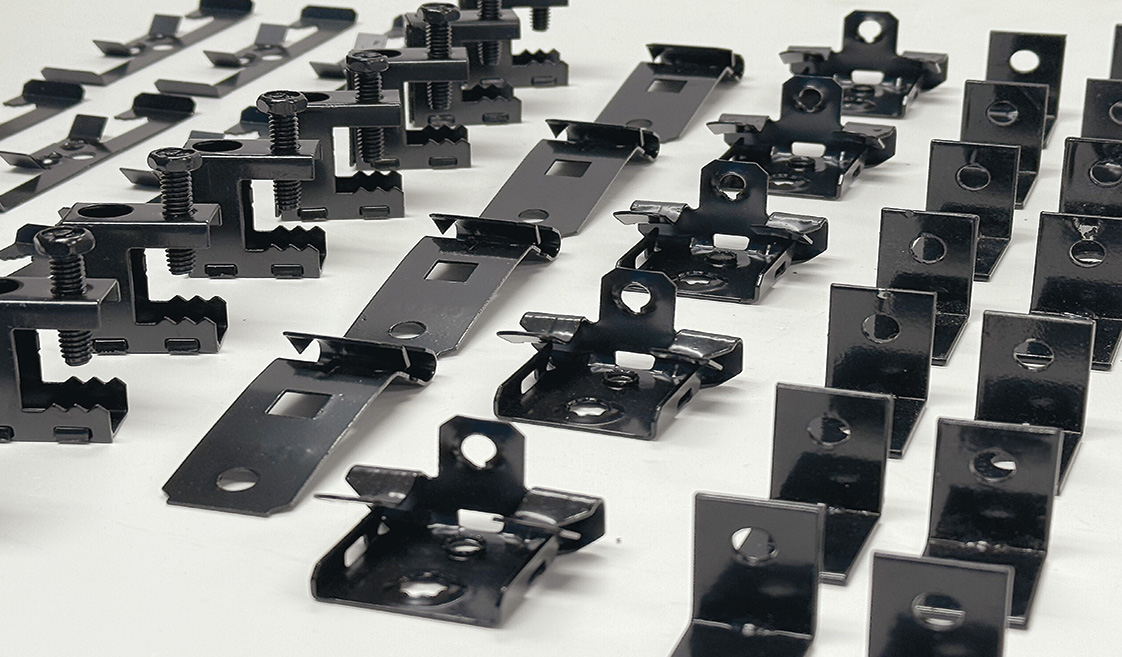
Every Mount Has Its Method
Discover the essential mounting methods used across the field—clips, clamps, and brackets designed for secure installs on steel, concrete, decking, and purlins. From supporting cable runs and conduit to suspending devices, sensors, and mechanical components from beams and threaded rod, this guide brings clarity to everyday attachment work across warehouses, data centers, manufacturing, commercial construction, and HVAC/mechanical environments. With a stronger understanding of how each mounting method performs in real‑world conditions, installers can streamline overhead work, standardize their approach, and deliver clean, reliable results across every trade.
With a solid understanding of mounting methods, let’s turn to best practices that ensure secure, efficient, and code-compliant installations in the field.
1. Pressed Beam Clamp
- Installs to: I‑beams, bar joists, and structural girders
- Installation: Secured using serrated jaws and an angled set screw—no specialty tools required
- Supports: ¼‑20 rod, J hooks, bridle rings, conduit hangers, ceiling wire, tray brackets, lighting, speakers, cameras, HVAC components, signage, industrial automation hardware
- Why Use: Versatile clamp for structural mounting where drilling is not allowed or practical
- System role: Provides a stable mounting base for cable, conduit, and device hardware on steel structures
- Use cases: Warehouses, data centers, industrial plants, commercial buildings, overhead cable pathways, lighting drops, AV devices, security cameras, mechanical supports
2. Spring Steel Beam Clamp
- Installs to: Horizontal steel flanges
- Installation: Clamped using serrated jaws and a set screw—no specialty tools required
- Supports: ¼″ and ⅜″ threaded rod, S‑hooks, electrical boxes, conduit, bridle rings, camera mounts, cable hardware
- Why Use: Fast, tool‑free install for light‑duty cable and device support
- System role: Quickly attaches to steel flanges to support overhead hardware without drilling
- Use cases: Light‑duty cable runs, device mounting, AV drops, security hardware, retrofit work, open‑ceiling environments
3. Malleable Iron Beam Clamp
- Installs to: I‑beams and trusses
- Installation: Heavy‑duty set screw clamp—secure and load‑rated
- Supports: Threaded rod, J hooks, bridle rings, tray brackets, conduit clamps, mechanical hangers
- Why Use: Strong, reliable clamp for heavier structural loads
- System role: Provides a robust mounting point for cable tray, conduit, and mechanical systems
- Use cases: Heavy cable tray, conduit runs, mechanical supports, industrial automation, multi‑trade overhead systems
4. Angle Clips
- Installs to: Concrete, block, wood, steel framing, walls, ceilings, beams
- Installation: Screwed, anchored, or installed with powder‑actuated tools
- Supports: J hooks, conduit clamps, threaded rod, bridle rings, cable hangers, electrical boxes
- Why Use: Broad substrate compatibility with permanent or fast‑install options
- System role: Creates a stable mounting base for vertical drops and wall/ceiling hardware
- Use cases: Wall‑mounted cable runs, conduit transitions, device mounting, structural tie‑ins, mixed‑material construction
5. Hammer‑On Clips
- Installs to: Edges of steel flanges
- Installation: Hammered into place—no drilling or tools required
- Supports: J hooks, S‑hooks, ceiling wire, chain, threaded rod
- Why Use: Fast, secure, and non‑penetrating attachment for steel structures
- System role: Provides a reliable mounting point for cable, conduit, and device hardware on steel flanges
- Use cases: Permanent cable pathways, AV and security hardware, lighting drops, mechanical supports, industrial overhead systems, open‑ceiling construction
6. Multifunctional (Batwing) Clips
- Installs to: Ceiling wire, threaded rod, or grid systems
- Installation: Tool‑free snap‑on attachment
- Supports: J hooks, bridle rings, electrical boxes, conduit, cable managers, sensors
- Why Use: Ideal for open ceilings, limited‑energy hardware, and retrofit installs
- System role: Provides rapid attachment for overhead cable and device support
- Use cases: Warehouses, distribution centers, manufacturing floors, retail ceilings, office open‑ceiling builds, sensor grids, AV drops, wireless access points, cable routing, security devices, industrial automation hardware, telecom and data cabling
7. Magnetic Mounts
- Installs to: Steel beams, panels, enclosures
- Installation: Tool‑free magnetic attachment
- Supports: J hooks, bridle rings, conduit clamps, signage, sensors, cameras
- Why Use: Adjustable, non‑invasive mounting—perfect for temporary layouts
- System role: Flexible support for light hardware without drilling
- Use cases: Permanent and temporary networks, warehouse sensors, industrial automation, movable AV, signage
8. Ceiling Grid Clips
- Installs to: Suspended T‑bar ceiling grids
- Installation: Snaps or hooks onto grid rails
- Supports: J hooks, cable hangers, signage, AV hardware, sensors
- Why Use: Non‑destructive mounting for drop‑ceiling environments
- System role: Supports cable and device hardware in commercial ceiling systems
- Use cases: Office AV, retail signage, sensor grids, wireless access points, low‑impact cable routing
9. Framing & Stud‑Mounted Brackets
- Installs to: Wood or metal studs
- Installation: Screwed or nailed into framing
- Supports: Conduit clamps, cable brackets, electrical boxes, sensors, AV plates
- Why Use: Fixed mounting for wall‑based cable and device support
- System role: Anchors hardware directly to structural framing
- Use cases: Wall‑mounted devices, conduit transitions, AV plates, structured cabling, residential and commercial framing
10. Concrete Deck Anchors
- Installs to: Concrete slabs and decks
- Installation: Installed with wedge bolts, epoxy anchors, or powder‑actuated fasteners
- Supports: Threaded rod, cable trays, conduit, mechanical hangers, trapeze brackets
- Why Use: Strong, permanent anchoring in hard substrates
- System role: Transfers load from cable and device hardware into structural concrete
- Use cases: Heavy tray systems, mechanical supports, conduit runs, industrial overhead infrastructure
11. Rod Couplers & Extensions
- Installs to: Existing threaded rods
- Installation: Threaded screw‑in connection—no tools required beyond initial rod setup
- Supports: Additional threaded rod, J hooks, cable brackets, trapeze hangers, tray supports
- Why Use: Enables modular expansion and offset support from existing rod systems
- System role: Extends vertical or horizontal support systems without re‑anchoring
- Use cases: Multi‑tier tray systems, offset supports, AV drops, mechanical trapeze builds
12. Purlin Clips
- Installs to: Z‑purlins, C‑purlins, and metal building roof framing
- Installation: Snaps or clamps onto purlin lips—no drilling required
- Supports: J hooks, bridle rings, threaded rod, lighting, sensors, cable hangers, AV hardware
- Why Use: Essential for warehouses, distribution centers, and metal‑building construction
- System role: Provides a secure mounting point on purlin framing without penetrating the steel
- Use cases: Warehouse cabling, lighting drops, sensor grids, industrial automation, long‑span structures
13. Strut Attachments
- Installs to: Strut/Unistrut channels
- Installation: Secured using strut nuts, brackets, or clamps
- Supports: Conduit, cable tray, J hooks, bridle rings, mechanical supports, AV hardware
- Why Use: Highly modular system for electrical, mechanical, and telecom installations
- System role: Creates adjustable, scalable support structures for multi‑trade environments
- Use cases: Multi‑trade racks, conduit runs, tray systems, AV structures, mechanical supports
14. Decking Hangers
- Installs to: Bar joists, pan deck, and corrugated metal decking
- Installation: Clips or clamps onto deck ribs—no drilling required
- Supports: Threaded rod, J hooks, cable hangers, lighting, mechanical supports
- Why Use: Ideal for new construction and large commercial projects
- System role: Provides overhead mounting points where deck penetration is not allowed
- Use cases: New construction cabling, lighting grids, mechanical supports, industrial overhead systems
15. Masonry Clips
- Installs to: Block, brick, and masonry joints
- Installation: Hammer‑in or friction‑fit—no anchors required
- Supports: Light‑duty cable hardware, signage, sensors, conduit straps
- Why Use: Fast, non‑destructive mounting on masonry surfaces
- System role: Provides attachment points without drilling into masonry
- Use cases: Retail signage, sensor mounting, light cable runs, temporary installations, masonry‑surface devices
16. Threaded Rod Top‑Mount Anchors
- Installs to: Concrete slabs, steel beams, or deck surfaces
- Installation: Screw‑in, drive‑in, or anchor‑set depending on substrate
- Supports: Threaded rod, trapeze hangers, cable tray, conduit, mechanical supports
- Why Use: Creates a top‑down anchor point for overhead support systems
- System role: Establishes primary load‑bearing points for multi‑trade support structures
- Use cases: Trapeze systems, heavy tray, conduit runs, mechanical equipment, industrial overhead builds
Winnie Industries is committed to providing exceptional structural attachments to support the needs of various industries. Look to us to engineer and manufacture innovative solutions that uphold innovation, strength, and dependability.
The information provided in this FAQ is for general informational purposes only and is not intended to replace official codes, standards, or project specifications. Winnie Industries products must always be installed and used in accordance with our product instruction sheets or designated training. Products should never be applied beyond their intended purpose or in a manner that exceeds specified load ratings. Proper fastening is critical to system integrity and functionality, requiring secure attachment to structurally sound components capable of supporting imposed loads. All installations must comply with governing codes, regulations, and job site requirements. Always consult your Authority Having Jurisdiction (AHJ) for specific regulatory guidance.