

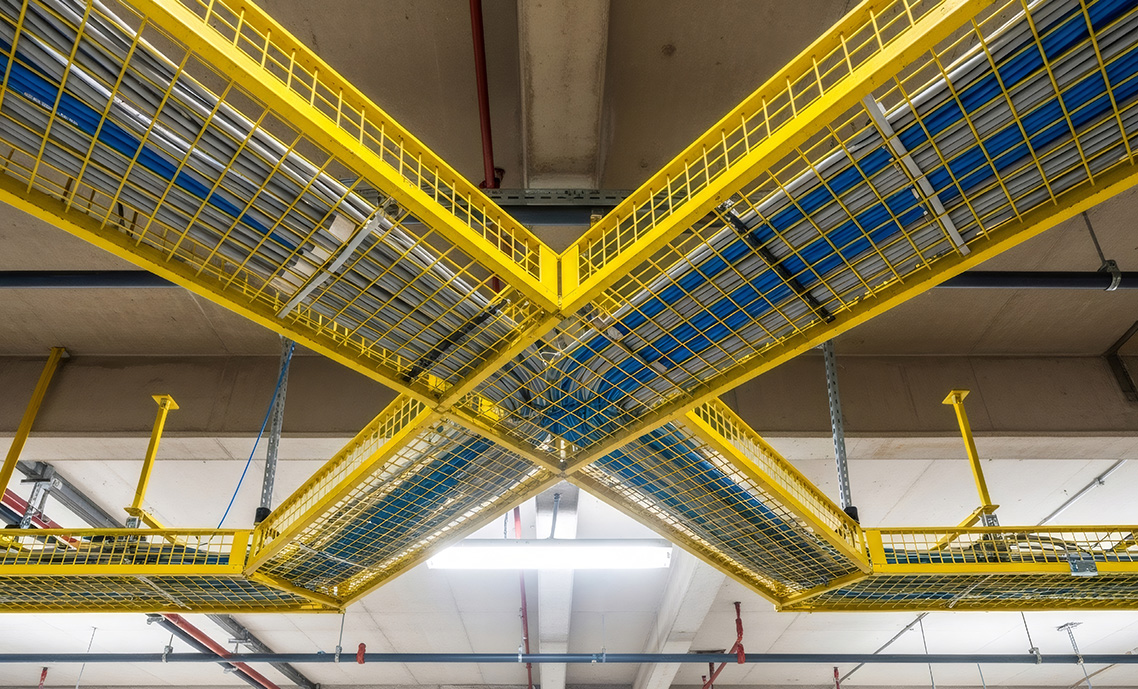
Unlimited Capacity? Not Up Here
Cable fill and capacity planning is the foundation of reliable low‑voltage infrastructure, influencing everything from conduit sizing, cable tray loading, and j hook spacing to bend radius, pulling tension, PoE heat buildup, and long‑term future capacity. Proper pathway design protects cable geometry, maintains signal performance, reduces installation stress, and prevents issues like compression, stacking, overheating, and deformation across copper, fiber, coax, and hybrid systems. By understanding how bundle diameter, pathway fill percentage, ventilation, and mechanical limits interact, installers can build pathways that support clean routing, safe expansion, and long‑term serviceability without rework or performance loss.
This section builds on those fundamentals and applies them directly to the pathway types used in the field.
1. Conduit and Raceway Fill Basics
Conduit fill is one of the most critical factors in determining how cables behave during installation and throughout the life of the system. The amount of space cables occupy inside a raceway directly affects pulling tension, friction, bend radius, heat retention, and the ability to add or replace cables later. When fill is planned correctly, the pathway supports smooth installation, protects cable geometry, and remains serviceable for decades. When it’s ignored, the raceway becomes a point of failure that drives damage, rework, and long‑term reliability issues.
Why It Matters:
Overfilled conduits increase pulling tension, deform cable jackets, violate bend radius, and create long‑term performance issues — especially for fiber and larger‑diameter copper bundles. Excessive fill also eliminates future capacity and forces trades into costly rework.
Best Practice:
Size conduits to maintain safe fill percentages, use long‑radius sweeps, avoid tight bends, and reserve space for future capacity. Select conduit diameters based on cable type, bundle diameter, and expected expansion. Avoid forcing cables into conduits that are already tight or partially obstructed.
Calculations:
Cable area = π × (diameter ÷ 2)²
Used to determine how much physical space one cable occupies inside a conduit or pathway.
Conduit area = π × (diameter ÷ 2)²
Used to determine the total usable internal area of the conduit.
Fill % = (total cable area ÷ conduit area) × 100
Used to determine how much of the conduit is occupied by the installed cables.
Bundle diameter ≈ 1.05 × √(Σ cable diameters²)
Used to estimate the diameter of a round cable bundle when multiple cables are pulled together.
Cable Type Impact:
Fiber is tension‑sensitive, coax is bend‑sensitive, and hybrid cables require higher tension allowances. Copper bundles carrying PoE generate heat and require additional space to avoid thermal buildup.
2. Cable Tray Fill Guidelines
Cable trays provide broad, open support for large volumes of cable, but they must be sized and loaded correctly to maintain airflow, prevent stacking, and protect cable geometry. Proper tray fill ensures cables remain accessible, evenly distributed, and free from compression. When trays are overloaded, cables deform, heat accumulates, and the pathway becomes difficult to service or expand.
Why It Matters:
Overfilled trays compress bundles, trap heat, deform cable geometry, and reduce performance — especially for PoE‑loaded copper and bend‑sensitive fiber. Poor distribution also creates uneven loading that can damage cables and complicate future additions.
Best Practice:
Distribute cables evenly across the tray width, avoid stacking, and maintain clear pathways for future additions. Keep trays level, avoid abrupt transitions, and maintain consistent support spacing. Use dividers or separate pathways when mixing cable types with different mechanical or thermal requirements.
Calculations:
Bundle diameter ≈ 1.05 × √(Σ cable diameters²)
Used to estimate the diameter of a round cable bundle for tray loading.
Tray fill = (bundle diameter × number of bundles) relative to tray width
Used to determine whether the tray can support the planned cable volume.
Cable Type Impact:
Fiber requires minimal compression and larger bend radius. PoE‑heavy copper bundles require ventilation. Coax must maintain stable geometry and should not be stacked.
3. J Hook Fill Guidelines
J hooks provide flexible, point‑support pathways for structured cabling, but their performance depends heavily on bundle diameter, spacing, and loading. Because j hooks support cables at discrete intervals, the shape and size of the bundle directly determine whether the support protects or deforms the cable. When sized and spaced correctly, j hooks offer excellent support and accessibility. When overloaded, they flatten cables, increase heat retention, and compromise performance.
Why It Matters:
Overfilled j hooks compress cable bundles, distort geometry, and increase heat buildup — especially in PoE‑loaded copper. Improper spacing leads to sagging, tension, and inconsistent support. Overloaded hooks also make future additions difficult and increase the risk of damage during service.
Best Practice:
Size j hooks based on actual bundle diameter, not cable count. Maintain consistent spacing, avoid stacking, and distribute weight evenly. Use larger hooks for mixed cable types or PoE‑heavy bundles. Avoid sharp transitions or directional changes that force cables into tight bends.
Calculations:
Bundle diameter ≈ 1.05 × √(Σ cable diameters²)
Used to determine the correct j hook size.
J hook size = bundle diameter + clearance
Used to ensure the hook supports the bundle without compression.
Cable Type Impact:
Fiber requires larger bend radius and minimal compression. PoE‑loaded copper bundles generate heat and require ventilation. Coax must maintain circular geometry and should not be pinched.
4. Bridle Ring Fill and Application Guidelines
Bridle rings are simple, low‑profile cable supports, but they require careful attention to fill, bundle size, and cable type to avoid deformation and long‑term performance issues. Because bridle rings do not provide a smooth bearing surface, the shape and size of the cable bundle directly determine whether the support protects or damages the cable. When used correctly, bridle rings offer fast, economical support for small bundles. When overloaded or misapplied, they flatten cables, trap heat, and permanently distort cable geometry.
Why It Matters:
Bridle rings concentrate pressure on the cable bundle, and excessive fill amplifies that pressure. Overloaded rings flatten copper pairs, deform fiber jackets, and increase heat retention in PoE bundles. Unlike j hooks or trays, bridle rings do not distribute weight evenly.
Best Practice:
Use bridle rings only for small, lightweight bundles and avoid stacking or forcing cables into the ring. Size the ring based on the actual bundle diameter, not the number of cables. Maintain consistent spacing and avoid mixing cable types within the same ring.
Calculations:
Bundle diameter ≈ 1.05 × √(Σ cable diameters²)
Used to determine whether the bundle fits safely within the bridle ring.
Ring fill = bundle diameter relative to ring inner diameter
Used to determine whether the ring provides adequate clearance.
Cable Type Impact:
Fiber should not be supported in bridle rings. Coax loses shielding integrity when compressed. PoE‑loaded copper bundles require ventilation and should not be tightly constrained. Hybrid cables require structured supports and should never be placed in bridle rings.
5. Bend Radius, Geometry, and Pulling Tension
Cable performance depends heavily on maintaining proper geometry during installation. Bend radius, pulling tension, and pathway fill all influence how cables behave when routed through a building. When these limits are respected, cables maintain their electrical and optical characteristics. When they’re exceeded, cables can suffer permanent damage that may not be immediately visible but will cause long‑term performance issues.
Why It Matters:
Tight bends, high tension, and overfilled pathways deform cables, increase attenuation, and damage fiber. Excessive tension can stretch copper conductors and micro‑crack fiber, leading to intermittent or permanent failures.
Best Practice:
Follow manufacturer bend radius guidelines, control pulling tension, and avoid forced bends caused by overfill. Use proper pulling techniques, lubrication when appropriate, and maintain smooth transitions throughout the pathway.
Calculations:
Minimum bend radius (copper) ≈ 4 × cable diameter
Used to prevent deformation and maintain performance.
Minimum bend radius (fiber) ≈ 10 × cable diameter
Used to prevent microbending and signal loss.
Maximum pulling tension = manufacturer rating × number of conductors
Used to avoid stretching or damaging cables during installation.
Cable Type Impact:
Fiber is the most bend‑sensitive. Coax loses shielding integrity when bent too tightly. Hybrid cables have strict tension limits due to power conductors.
6. Heat, Bundling, and PoE Performance
Cable bundles generate heat, especially when carrying PoE loads. Pathway fill directly affects temperature rise, airflow, and the ability of cables to dissipate heat. As PoE wattage increases, so does the importance of managing bundle size and pathway density. Proper planning ensures that cables operate within safe temperature limits and maintain long‑term performance.
Why It Matters:
Excessive heat reduces performance, accelerates insulation aging, and can require PoE derating — especially in large bundles or tightly packed trays. Heat buildup is one of the most overlooked causes of long‑term cable failure.
Best Practice:
Limit bundle size, avoid tight compression, provide ventilation, and plan pathways that dissipate heat effectively. Avoid stacking bundles and maintain spacing in trays and j hooks. Consider separating high‑power PoE circuits when possible.
Calculations:
Heat rise ∝ bundle size + current load
Used to understand how bundle size and PoE wattage affect temperature.
PoE derating = manufacturer‑provided adjustment based on temperature
Used to determine allowable power levels in higher‑temperature environments.
Bundle diameter = key factor in heat retention
Used to size pathways to reduce thermal buildup.
Cable Type Impact:
PoE‑loaded copper generates the most heat. Fiber does not generate heat but is affected by surrounding temperature. Hybrid cables may require additional spacing due to power conductors.
7. Future Capacity and Expansion Planning
Pathways must support future adds, moves, and system upgrades without requiring rework. Proper capacity planning ensures that cable infrastructure remains flexible, scalable, and cost‑effective over the life of the building. When pathways are sized with expansion in mind, new systems can be added without disruption or compromise.
Why It Matters:
100% fill at installation eliminates flexibility and forces trades into improvisational routing later. Lack of capacity leads to overcrowded trays, unsafe conduit pulls, and costly rework.
Best Practice:
Reserve space for growth, size pathways for multi‑phase construction, and avoid filling trays or conduits to maximum capacity. Consider emerging technologies and expected increases in cable density.
Calculations:
Future capacity = current fill + planned expansion allowance
Used to determine how much space to reserve.
Expansion allowance = % of pathway intentionally left unused
Used to maintain flexibility for future work.
Cable Type Impact:
Fiber upgrades often require additional slack storage. Copper upgrades may require larger bundles or higher‑power PoE circuits. Hybrid systems may require new pathways entirely.
8. System‑Specific Considerations
Different cable types have different fill, bend, heat, and tension requirements. Each system must be evaluated based on its unique physical and performance characteristics. Understanding these differences ensures that pathways are designed to support all systems safely and effectively.
Why It Matters:
Copper, fiber, coax, hybrid, and life‑safety circuits each respond differently to fill and bundling. Ignoring these differences leads to performance issues, safety concerns, and failed inspections.
Best Practice:
Apply system‑appropriate spacing, bend radius, and routing rules based on cable type. Separate incompatible systems, maintain clearances, and follow manufacturer recommendations.
Calculations:
Fiber bend radius = 10 × diameter
Used to prevent microbending.
Copper bundle diameter = key factor in tray and j hook sizing
Used to determine pathway capacity.
Hybrid cable tension limits = manufacturer‑specified
Used to prevent conductor damage.
Cable Type Impact:
Fiber requires gentle handling and larger bend radius. Copper bundles require ventilation. Coax requires stable geometry. Hybrid cables require tension control.
9. Common Field Mistakes and How to Avoid Them
Most fill‑related failures come from predictable installation errors. Avoiding these mistakes prevents rework, service issues, and long‑term performance problems. When installers understand the consequences of improper fill, they can make better decisions in the field and maintain the integrity of the pathway.
Why It Matters:
Improper fill, tight bends, and compressed bundles lead to long‑term reliability issues and costly troubleshooting. Many failures are preventable with proper planning and execution.
Best Practice:
Avoid overfilling j hooks, overstuffing conduits, ignoring bend radius, compressing PoE bundles, and eliminating future capacity. Maintain consistent support spacing and avoid mixing incompatible systems.
Calculations:
None — this section focuses on installation behavior, not numeric evaluation.
Cable Type Impact:
All cable types are affected by poor installation practices, but fiber and PoE‑loaded copper are the most sensitive.
Together, these fundamentals establish the baseline for cable fill and capacity decisions.
This guide is intended for informational and reference purposes only. It does not supersede local codes, manufacturer specifications, or the judgment of the Authority Having Jurisdiction (AHJ). Installation practices must always be verified against current NEC, ANSI/TIA standards, and site-specific requirements. Winnie Industries products must be installed and used in accordance with official instruction sheets or designated training. Products should never be applied beyond their intended purpose or in a manner that exceeds specified load ratings. Proper fastening is critical to system integrity and functionality, requiring secure attachment to structurally sound components capable of supporting imposed loads. All installations must comply with governing codes, regulations, and job site requirements. Always consult your AHJ for specific regulatory guidance.