

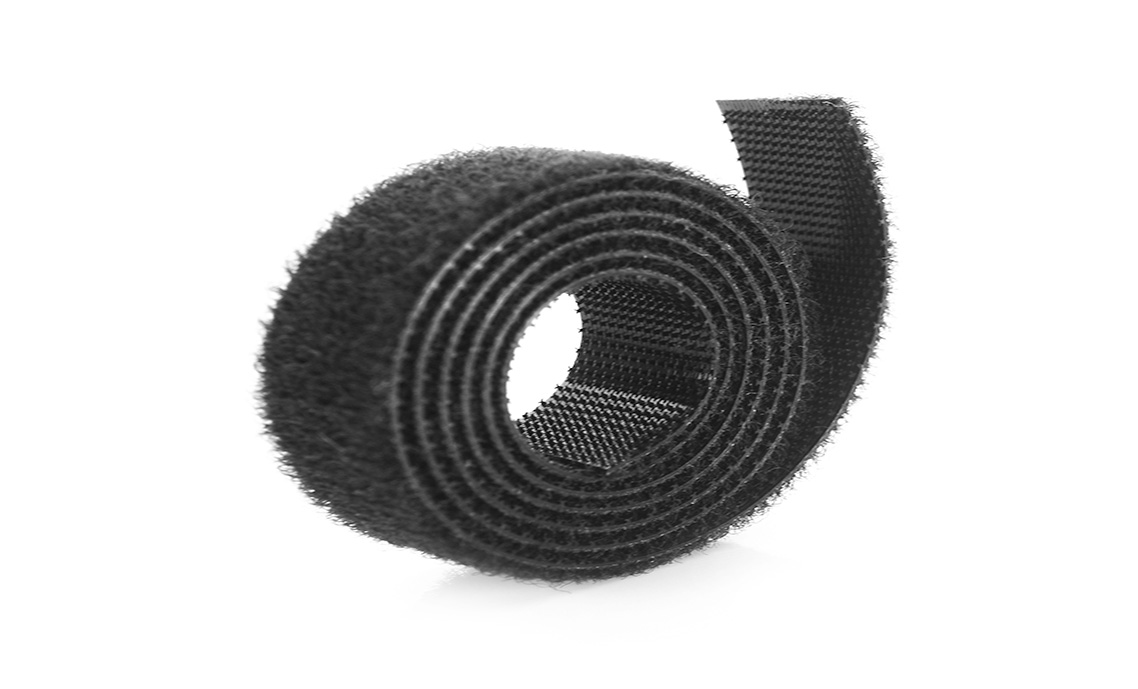
Loop It, Don’t Lose It
In environments where cable routing must adapt to shifting layouts, maintenance cycles, or safety protocols, the fastening method matters as much as the cable itself. Hook and loop ties offer a rare combination of flexibility, reusability, and field‑readiness—making them indispensable for teams that need to move fast without compromising on protection, precision, or long‑term performance. Their soft, rework‑friendly design supports clean cable management, protects sensitive low‑voltage and limited energy systems, and maintains consistent routing across suspended ceilings, equipment racks, and dynamic installation environments.
To translate that flexibility into reliable, field‑ready performance, teams should apply hook and loop ties using best practices that support safety, durability, and efficient cable routing
Overview: What Hook and Loop Cable Ties Do
Hook and loop cable ties provide a reusable, cable-safe alternative to single-use plastic ties, offering long-term value, improved safety, and greater adaptability across commercial, industrial, and limited energy applications. Their soft, non-marring construction supports clean bundling, easy rework, and repeatable maintenance in environments where precision, organization, and flexibility matter.
Why Hook and Loop Matters in Cable Management
Traditional plastic ties are single-use, require cutting tools for removal, and can become brittle in cold or aging conditions—introducing safety risks, added labor, and unnecessary waste. Hook and loop ties eliminate these issues with a reusable, tool-free design that supports safer workflows and reduces material consumption over the life of the system.
Key Advantages of Hook and Loop Cable Ties
- Reusable Construction: Opens and resecures repeatedly without damaging insulation or connectors, reducing waste and long-term material costs.
- Flexible Sizing and Identification: Offered in multiple lengths, widths, and colors to support bundling logic, circuit identification, and project-specific requirements.
- Tool-Free Handling: Can be applied, adjusted, or removed by hand, improving ergonomics and reducing the risk of cuts or accidental cable damage.
- Cable-Friendly Grip: Distributes pressure evenly and avoids pinch points, protecting insulation during installation and maintenance.
- Environmental Options: Available in constructions rated for UV exposure, moisture, and temperature variation when required by the environment.
- Maintenance Efficiency: Quick-release functionality supports faster rerouting, inspection, and cable replacement without disturbing the surrounding bundle.
Deployment Considerations for Hook and Loop
- Compatibility: Confirm suitability for cable diameter, bundle density, and routing requirements.
- Identification: Use color-coding to support labeling and maintenance workflows.
- Environmental Ratings: Verify UV, moisture, and temperature requirements when applicable.
- Training: Ensure field teams understand proper tensioning and reusability practices.
- Protection: Avoid over-tightening, which can reduce reusability or stress cable insulation.
- Compliance: Confirm acceptance for the specific limited energy system, fire/smoke rating, and project specification.
Using Hook and Loop with Magnetic Cable Managers
Hook and loop ties pair effectively with magnetic cable managers to create a modular, strain-relief-ready routing system. This combination supports fast installation, safe tension release, and easy maintenance across dynamic or evolving cable paths.
- Modular Routing: Magnetic mounts anchor the bundle to steel surfaces while hook and loop ties secure individual cables without over-compression.
- Passive Strain Relief: If tension builds, the magnet releases before the cable is stressed, while the hook and loop tie maintains bundle organization.
- Rapid Repositioning: Both components adjust or remove without tools, reducing downtime and supporting frequent pathway changes.
- Field Versatility: Suitable for construction sites, data centers, mobile equipment, and retrofit conditions where cable paths may shift.
- Safety and Sustainability: Eliminates sharp edges, cutting tools, and single-use waste, supporting safer workflows and long-term cost efficiency.
Bottom Line: Why Hook and Loop Remains a Field Favorite
Hook and loop cable ties deliver a safer, more adaptable, and cost-effective approach to cable management for limited energy and communications systems. Their reusability, cable-friendly grip, and tool-free handling make them a strong choice for teams prioritizing safety, sustainability, and operational efficiency across a wide range of environments—when selected and applied in accordance with project specifications and code requirements.
Hook and loop cable ties offer a flexible, reusable, and durable alternative to traditional plastic ties—improving cable performance, installation safety, and long-term reliability across all environments.
This guide is intended for informational and reference purposes only. It does not supersede local codes, manufacturer specifications, or the judgment of the Authority Having Jurisdiction (AHJ). Installation practices must always be verified against current NEC, ANSI/TIA standards, and site-specific requirements. Winnie Industries products must be installed and used in accordance with official instruction sheets or designated training. Products should never be applied beyond their intended purpose or in a manner that exceeds specified load ratings. Proper fastening is critical to system integrity and functionality, requiring secure attachment to structurally sound components capable of supporting imposed loads. All installations must comply with governing codes, regulations, and job site requirements. Always consult your AHJ for specific regulatory guidance.