

Before You Bend, Know the Type
Conduit selection directly affects how electrical systems perform, age, and withstand the environments they’re installed in. Each electrical conduit type carries specific strengths, limitations, and NEC requirements that determine where it should—and should not—be used. When the wrong type is chosen, installations become harder to route, more difficult to pull, and more vulnerable to corrosion, overheating, or mechanical damage. Understanding conduit types is the foundation for predictable layouts, compliant commercial and industrial installations, and long‑term system reliability. Proper conduit selection supports clean routing, safer wiring methods, and long‑term inspectability.
With the fundamentals established, the following sections outline each electrical conduit type and the practices that ensure proper performance in real installations.
1. Understand Conduit Types
Why It Matters: Each conduit type is engineered for specific environments, durability requirements, and installation conditions. Selecting the wrong type can lead to corrosion, overheating, mechanical failure, or inspection issues. Understanding conduit types ensures safe, predictable routing across commercial, industrial, and specialty applications.
Best Practice: Match conduit type to the environment, exposure level, mechanical protection needs, and code requirements before layout or installation begins.
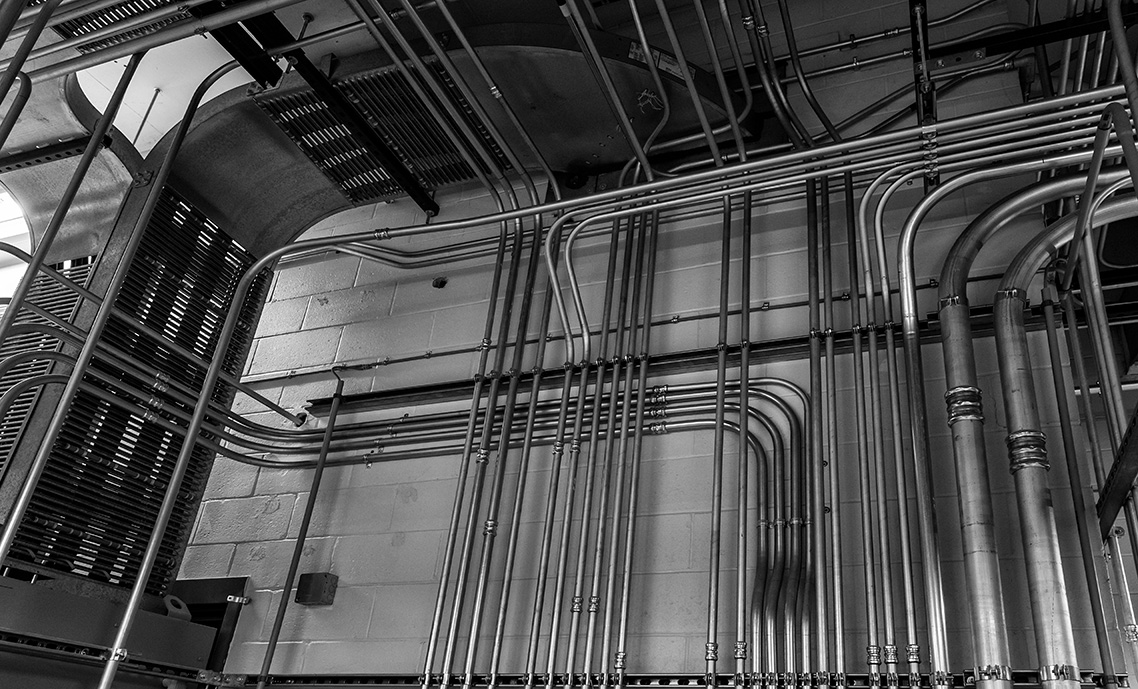
- EMT (Electrical Metallic Tubing): Lightweight and easy to bend; ideal for commercial interiors.
- RMC (Rigid Metal Conduit): Thick-walled and corrosion-resistant; used outdoors and underground.
- IMC (Intermediate Metal Conduit): Lighter than RMC but still suitable for exposed areas.
- FMC (Flexible Metal Conduit): Used for equipment terminations and vibration zones.
- ENT (Electrical Nonmetallic Tubing): Flexible plastic; used in low-voltage or plenum-rated spaces.
- PVC (Rigid Polyvinyl Chloride Conduit): Non-metallic and moisture-resistant; common in underground or wet locations.
- RTRC (Reinforced Thermosetting Resin Conduit): Fiberglass; used in corrosive or high-temperature environments.
2. EMT (Electrical Metallic Tubing)
Why It Matters: EMT is widely used in commercial interiors due to its light weight and bendability. Improper support spacing, poor bending technique, or exposure to corrosive environments can lead to conductor damage, mechanical failure, or inspection issues.
Best Practice: Use EMT in dry, protected environments, maintain NEC-compliant support spacing, and ensure all bends and fittings meet manufacturer and code requirements.
- Use EMT in commercial interiors: aligns with its lightweight, easy-bend characteristics.
- Maintain support spacing per NEC 358.30: typically every 10 ft and within 3 ft of boxes.
- Use listed set-screw or compression fittings: ensures mechanical and electrical continuity.
- Avoid corrosive or wet environments: EMT is not corrosion-resistant unless specially coated.
- Follow NEC bend radius rules: prevents insulation damage and reduces pull friction.
3. RMC (Rigid Metal Conduit)
Why It Matters: RMC provides maximum physical protection and corrosion resistance. It is the preferred choice for outdoor, underground, and high-impact environments. Incorrect threading, improper burial depth, or missing bonding can compromise system integrity.
Best Practice: Use RMC where durability and protection are critical, maintain thread integrity, and follow NEC burial and bonding requirements.
- Use RMC outdoors and underground: ideal for weather exposure and soil contact.
- Follow NEC 300.5 burial depth requirements: ensures protection from physical damage.
- Apply thread sealant in wet locations: maintains continuity and corrosion resistance.
- Inspect threads before reuse: RMC can be reused if undamaged and clean.
- Use sealed fittings in hazardous locations: required per NEC Article 501.
4. IMC (Intermediate Metal Conduit)
Why It Matters: IMC offers strength similar to RMC with reduced weight, making it suitable for exposed areas. Improper threading, incompatible fittings, or damaged coating can lead to corrosion or grounding issues.
Best Practice: Use IMC in exposed environments requiring durability, maintain thread quality, and use only listed IMC/RMC fittings.
- Use IMC where strength is needed: lighter than RMC but still durable.
- Maintain thread integrity: IMC uses the same threaded fittings as RMC.
- Ensure bonding continuity: metallic transitions must remain electrically continuous.
- Use listed IMC/RMC fittings only: EMT fittings are not compatible.
- Protect coating during cutting: damaged coating increases corrosion risk.
5. FMC (Flexible Metal Conduit)
Why It Matters: FMC provides flexibility for equipment terminations and vibration zones. Excessive length, sharp bends, or missing grounding conductors can reduce system reliability and violate code.
Best Practice: Use FMC for short flexible connections, protect it from sharp edges, and maintain proper bend radius and grounding.
- Use FMC for vibration zones and equipment terminations: ideal for motors, HVAC, and moving equipment.
- Limit FMC length: long runs reduce grounding reliability and increase pull difficulty.
- Use anti-short bushings where required: protects conductor insulation.
- Maintain bend radius: prevents conductor damage and excessive friction.
- Add grounding conductor when required: depends on length and application.
6. ENT (Electrical Nonmetallic Tubing)
Why It Matters: ENT is lightweight and flexible, making it useful for low-voltage and plenum-rated spaces. Improper support, overtightened straps, or exposure to heat can deform tubing and compromise routing.
Best Practice: Use ENT in dry, low-voltage or plenum environments, support it properly, and avoid heat sources.
- Use ENT in low-voltage or plenum spaces: matches its flexibility and rating.
- Use manufacturer-listed straps: prevents deformation and pullout.
- Avoid heat sources: ENT can soften or deform under high temperatures.
- Ensure fittings fully lock: prevents pullout during conductor installation.
- Follow plenum requirements: required in air-handling spaces.
7. PVC (Rigid Polyvinyl Chloride Conduit)
Why It Matters: PVC is corrosion-resistant and ideal for underground or wet locations. Improper solvent welding, missing expansion fittings, or inadequate support can lead to joint failure or sagging.
Best Practice: Use PVC in underground or wet environments, prepare joints properly, and support long runs to prevent sagging.
- Use PVC in underground or wet locations: moisture-resistant and non-metallic.
- Deburr and chamfer cut ends: protects conductor insulation.
- Use expansion fittings: required for long runs exposed to temperature swings.
- Support PVC adequately: prevents sagging and deformation.
- Transition to metal conduit when needed: required in high-impact or exposed areas.
8. RTRC (Reinforced Thermosetting Resin Conduit)
Why It Matters: RTRC (fiberglass) is designed for corrosive or high-temperature environments where metal conduit fails. Incorrect support spacing, incompatible fittings, or over-torqued threads can cause cracking or mechanical failure.
Best Practice: Use RTRC in corrosive or high-temperature environments, follow manufacturer support spacing, and avoid over-torquing fittings.
- Use RTRC in corrosive or high-temperature zones: ideal where metal conduit degrades.
- Follow manufacturer support spacing: fiberglass deflects differently than metal.
- Use listed RTRC fittings only: mixing with metal fittings requires approval.
- Verify grounding requirements: RTRC may require a dedicated grounding conductor.
- Avoid over-torquing threads: fiberglass threads can crack under excessive force.
When conduit types are selected and installed correctly, electrical systems remain compliant, easier to maintain, and better protected against corrosion, damage, and future expansion needs.
This guide is intended for informational and reference purposes only. It does not supersede local codes, manufacturer specifications, or the judgment of the Authority Having Jurisdiction (AHJ). Installation practices must always be verified against current NEC, ANSI/TIA standards, and site-specific requirements. Winnie Industries products must be installed and used in accordance with official instruction sheets or designated training. Products should never be applied beyond their intended purpose or in a manner that exceeds specified load ratings. Proper fastening is critical to system integrity and functionality, requiring secure attachment to structurally sound components capable of supporting imposed loads. All installations must comply with governing codes, regulations, and job site requirements. Always consult your AHJ for specific regulatory guidance.