

Tie It All Together
Cable ties are one of the simplest tools in the field, but choosing the right type—and using it correctly—makes a real difference in durability, safety, and inspection readiness. This guide gives installers a clear, practical reference for materials, ratings, applications, and best practices without the clutter of technical code language. Whether you’re bundling conductors, routing low‑voltage cabling, or working in plenum or outdoor environments, these answers help you select and install cable ties with confidence.
The questions below outline the key material options, installation practices, and environmental considerations that affect cable tie performance, giving you a clear reference for field use.
Cable Tie Basics
1. What are cable ties and what are they used for?
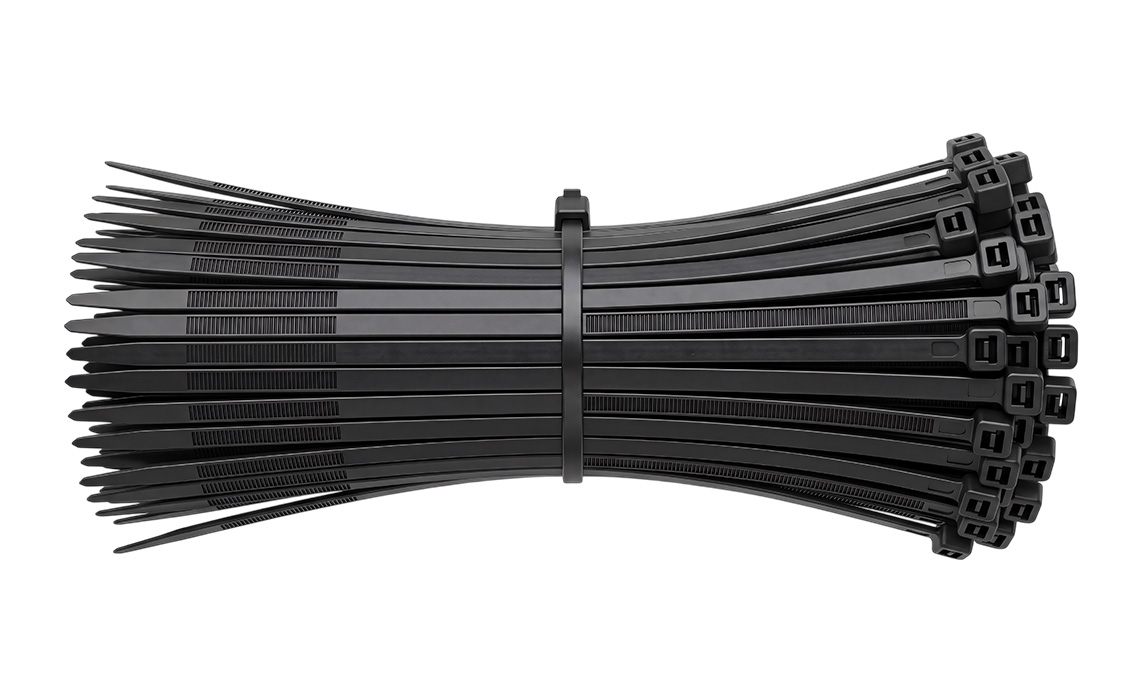
Cable ties are mechanical fasteners used to bundle, organize, and secure electrical, low‑voltage, and data wiring. They keep conductors routed neatly and prevent strain or movement in panels, racks, and field installations.
- Bundling branch‑circuit wiring
- Organizing low‑voltage cabling
- Securing wiring inside enclosures or equipment racks
2. What materials are cable ties made from?
Cable ties are manufactured in several materials to match different installation environments. Nylon is the most common, but outdoor, chemical, and high‑heat applications require specialized formulations or stainless steel.
- Nylon 6/6 (general purpose)
- UV‑stabilized or weather‑resistant nylon
- Heat‑stabilized nylon
- Flame‑retardant nylon
- Polypropylene (chemical resistance)
- ETFE/Tefzel (chemical and radiation resistance)
- Stainless steel (304 or 316)
3. What specialty cable tie types are available?
Specialty cable ties provide mounting, identification, or high‑strength features beyond standard ties. These options help installers solve specific routing or labeling challenges.
- Push‑mount and screw‑mount ties
- Panel‑mount ties
- Barb‑lock stainless ties
- Double‑loop ties
- Identification ties with label plates
- Hook‑and‑loop (Velcro‑style) ties
4. What do the UL 62275 cable tie classifications mean?
UL 62275 defines performance categories based on strength retention, conditioning, and long‑term material qualification. These types help installers select ties appropriate for electrical, industrial, or support applications.
- Type 1 / Type 11: Nonmetallic ties; Type 11 includes long‑term material qualification.
- Type 2 / Type 21: Metallic or composite ties; Type 21 includes long‑term material qualification.
- Type 2S / Type 21S: Evaluated for supporting flexible conduit, tubing, or cable.
5. How are cable ties marked for UL compliance?
UL‑listed cable ties include markings that identify their performance type and manufacturer. These markings help installers confirm suitability for electrical or plenum installations.
- UL 62275 Type (1, 11, 2, 21, 2S, 21S)
- Manufacturer identification code
- Material indicators (UV, HS, FR)
- Listing information on packaging
Choosing the Right Cable Tie
6. How do I choose the correct cable tie for the job?
Choosing the right cable tie depends on environment, bundle size, mechanical load, and code requirements. Matching the tie’s material and rating to the installation conditions ensures long‑term reliability.
- Indoor vs outdoor use
- Heat or chemical exposure
- Required tensile strength
- UL type classification
- Plenum or support requirements
7. What environmental and material factors affect cable tie performance?
Cable ties can degrade when exposed to UV, heat, moisture, or chemicals. Selecting the correct material prevents premature failure and ensures the tie maintains its rated strength.
- Sunlight
- Elevated temperatures
- Humidity
- Chemical vapors
- Mechanical vibration
8. How does chemical exposure affect cable ties?
Chemicals can weaken or degrade polymer ties, especially standard nylon. In harsh environments, choosing a chemically resistant material prevents cracking, embrittlement, or loss of strength.
- Polypropylene
- ETFE/Tefzel
- Stainless steel
9. How does temperature affect cable tie strength and aging?
High temperatures reduce tensile strength and accelerate aging, especially in standard nylon ties. Cold temperatures can make ties brittle during installation, increasing the chance of cracking. Heat‑stabilized nylon or stainless steel ties are recommended for elevated‑temperature environments.
10. How does vibration affect cable tie performance?
Vibration can cause ties to loosen, fatigue, or wear against cable jackets over time. Metallic ties resist vibration better, and proper tensioning helps prevent movement within the bundle.
11. What performance ratings and material options should I consider when selecting cable ties?
Installers should review tensile strength, temperature ratings, flame ratings, and material grade before choosing a tie. These ratings ensure the tie can withstand the mechanical and environmental demands of the installation.
- Tensile strength
- Operating and installation temperature
- UL 94 flame rating
- Material type (nylon, polypropylene, ETFE, stainless steel)
- Stainless steel grade (304 vs 316)
12. Are there cable ties designed for radiation‑resistant environments?
Yes. ETFE (Tefzel) cable ties are engineered for environments where radiation would degrade nylon. These ties maintain mechanical strength in nuclear facilities, medical imaging equipment, and industrial processes involving radiation exposure.
Installation & Application
13. Where are cable ties used and what do they support?
Cable ties are used across electrical, low‑voltage, data, telecom, and industrial installations to secure and organize wiring. They help maintain routing inside panels, racks, and equipment, reducing strain and preventing movement.
UL Types 2S and 21S may support flexible conduit or cable where permitted by code.
14. How should cable ties be installed properly?
Proper installation prevents insulation damage and ensures long‑term reliability. Using a tensioning tool and trimming tails flush helps maintain consistent, safe installations.
- Tighten only until snug
- Trim tails flush
- Space ties evenly
- Avoid sharp edges and heat sources
15. How do I prevent damage to conductors and insulation when using cable ties?
Avoid overtightening, which can compress insulation or deform conductors. Using wider ties for larger bundles distributes pressure more evenly and reduces the risk of jacket damage. Maintaining proper bend radius also helps protect insulation.
16. How should cable ties be routed around heat‑producing equipment?
Cable ties should be routed away from warm surfaces, vents, and components that generate heat. Elevated temperatures accelerate aging and reduce strength, especially in standard nylon ties. Heat‑stabilized nylon or stainless steel ties are recommended near transformers, drives, lighting fixtures, or HVAC equipment.
17. Can cable ties be used in air‑handling (plenum) spaces?
Yes, but only cable ties specifically listed for use in environmental air spaces. Plenum‑rated ties meet flame‑spread and smoke‑generation requirements that standard nylon ties do not. Always verify the UL listing before installing ties in plenum areas.
18. Are only red (maroon) cable ties plenum‑rated?
No. Color has no relationship to plenum rating. Some manufacturers use maroon to identify plenum‑rated ties, but others use natural, black, or specialty colors. The only reliable indicator is the UL listing and marking, not the color of the tie.
19. How can color‑coded cable ties be used for identification?
Color‑coded ties help installers quickly identify circuits, systems, or voltage levels. They improve organization and reduce troubleshooting time in panels and field installations.
- Circuit grouping
- Voltage identification
- System type marking
20. When should releasable or specialty cable ties be used?
Use specialty ties when installation conditions require mounting, labeling, rework, or added strength. Releasable ties are ideal for panels or racks where changes are frequent.
- Releasable ties for rework
- Screw‑mount ties for surface attachment
- Identification ties for labeling
- Hook‑and‑loop ties for sensitive cables
Maintenance & Safety
21. How often should cable ties be inspected or replaced?
Outdoor, high‑heat, or high‑vibration installations should be inspected annually for signs of brittleness, discoloration, or cracking. Indoor installations with stable conditions may require less frequent inspection. Any tie showing wear or loss of flexibility should be replaced immediately.
22. What safety and code considerations apply to cable ties?
Cable ties must be listed for electrical use and appropriate for the installation environment. Plenum spaces, outdoor locations, and corrosive areas require specific material ratings to meet code requirements.
- UL listing and type classification
- Plenum suitability
- UV resistance for outdoor use
- Stainless steel for corrosive or fire‑rated areas
23. What safety, fire‑resistance, and installation mistakes should I be aware of when using cable ties?
Plenum‑rated ties must meet flame‑spread and smoke‑generation requirements, and general nylon ties are not automatically flame‑rated. Common installation mistakes include overtightening, incorrect material selection, and routing near heat sources.
- Using non‑plenum ties in air‑handling spaces
- Overtightening bundles
- Improper spacing or routing
- Using unlisted ties in electrical installations
Compliance & Standards
24. What compliance listings and chemical compatibility information should installers review?
Installers should verify UL, CSA, IEC, RoHS, and REACH compliance based on project requirements. Chemical compatibility charts help ensure the tie material will withstand oils, solvents, acids, or corrosive vapors present in industrial environments.
- UL 62275
- CSA C22.2
- IEC 62275
- RoHS and REACH
- Chemical compatibility for nylon, polypropylene, ETFE, and stainless steel
Applied correctly, cable ties provide dependable support and organization across a wide range of field conditions.
The information provided in this FAQ is for general informational purposes only and is not intended to replace official codes, standards, or project specifications. Winnie Industries products must always be installed and used in accordance with our product instruction sheets or designated training. Products should never be applied beyond their intended purpose or in a manner that exceeds specified load ratings. Proper fastening is critical to system integrity and functionality, requiring secure attachment to structurally sound components capable of supporting imposed loads. All installations must comply with governing codes, regulations, and job site requirements. Always consult your Authority Having Jurisdiction (AHJ) for specific regulatory guidance.