

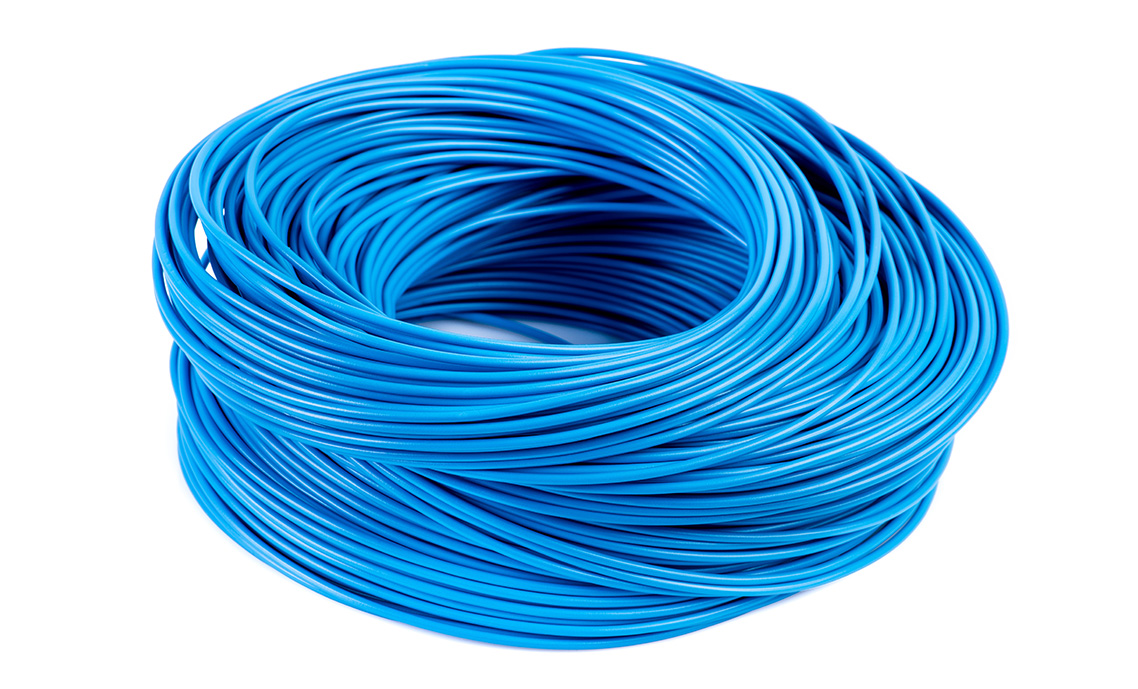
Twisted Pair, Straight Facts
Category cable is the physical foundation of modern connectivity, carrying data and Power over Ethernet (PoE) across environments ranging from residential networks to large‑scale commercial, industrial, and mission‑critical facilities. Each category introduces its own electrical performance characteristics, shielding options, and installation requirements, which directly influence bandwidth, noise immunity, and PoE behavior. Whether it’s basic home networking, enterprise switching, high‑density wireless, building automation, or ruggedized industrial control, the cable category determines what the system can reliably support.
The following sections outline the major cable types used today—from Category 3 through Category 8—along with specialized variants such as industrial and extended‑distance Ethernet.
Legacy Cabling
Category 3
Technical Profile:
- Twisted-pair cable rated to 16 MHz.
- Typically 24 AWG solid or stranded copper conductors.
- Available in 2-, 4-, and high-pair configurations (e.g., 25-pair, 100-pair) for multi-line voice and PBX systems.
- Designed for analog voice and token ring networks.
- Supports 10BASE-T Ethernet only under ideal conditions.
- Unshielded construction.
Common Deployment Environments:
- Legacy PBX systems and analog voice continuity zones.
- Alarm panels and paging infrastructure in pre-2000 buildings.
- Older telecom closets, backboards, and behind wall plates.
Installer Consequences:
- Loosely twisted pairs with inconsistent geometry.
- Insulation and jackets may be brittle with age.
- Commonly jacketed in CM or CMR PVC.
- Typically terminated on 66 blocks, RJ11, or legacy punchdown hardware.
Specifier Accountability:
- Obsolete for modern data networks.
- Acceptable only for maintaining analog voice continuity.
- Should be clearly labeled, isolated from active data runs, and documented during retrofit work.
Power over Ethernet (PoE) Compatibility:
- No Power over Ethernet (PoE) support.
Category 5
Technical Profile:
- Early twisted-pair cable rated to 100 MHz.
- Typically 24 AWG solid or stranded copper conductors.
- Supports 100BASE-TX Ethernet.
- Unshielded construction.
- No Power over Ethernet (PoE) support.
Common Deployment Environments:
- 1990s LAN installations and transitional telecom rooms.
- Legacy patch panels and abandoned ceiling or riser runs.
Installer Consequences:
- Loose twist geometry and higher susceptibility to noise.
- Typically jacketed in CM or CMR PVC.
Specifier Accountability:
- Do not specify for new builds.
- Reject reuse for modern data applications due to limited performance and lack of PoE support.
Power over Ethernet (PoE) Compatibility:
- No Power over Ethernet (PoE) support.
Modern Cabling
Category 5e
Technical Profile:
- Standard Category 5 Enhanced cable rated to 100 MHz.
- Typically 24 AWG copper conductors in solid or stranded form.
- Supports 1 Gb Ethernet over 100 meters.
- Typically unshielded (U/UTP).
- Available in 2-, 4-, and high-pair configurations (e.g., 25-pair) for voice and data risers.
Common Deployment Environments:
- Offices, schools, and residential spaces with basic data and IoT needs.
- Telecom rooms and patch panels in low-EMI environments.
Installer Consequences:
- Moderate EMI resistance with standard RJ45 termination.
- Performance can degrade if bend radius or termination geometry is not maintained.
- Often upgraded to Category 6 where additional PoE headroom or EMI resilience is desired.
Specifier Accountability:
- Acceptable for low-power PoE and basic Ethernet applications.
- Confirm plenum or riser rating based on pathway and code requirements.
- Not recommended for high-density PoE or EMI-critical zones.
Power over Ethernet (PoE) Compatibility:
- Supports PoE Types 1 and 2 (up to 25.5W) over two pairs.
Category 5E
Technical Profile:
- Premium Category 5 Enhanced cable rated to 100 MHz and typically tested to 350 MHz.
- Typically 24 AWG copper conductors, solid or stranded.
- Supports 1 Gb Ethernet over 100 meters.
- Manufactured to tighter tolerances than standard Category 5e, with improved twist geometry and reduced crosstalk.
Common Deployment Environments:
- Telecom rooms and patch panels where verified 1 Gb performance is required.
- Commercial buildings with higher-bandwidth needs.
- Applications such as IP video, building automation, and access control.
Installer Consequences:
- Uses standard RJ45 termination with tighter twist control.
- Behaves similarly to Cat5e during installation but with improved electrical performance.
Specifier Accountability:
- Not recognized by TIA — verify labeling and performance claims before specifying.
- Acceptable for 1 Gb Ethernet and moderate PoE loads.
- Do not mix with generic Cat5e in high-performance or tightly specified zones.
Power over Ethernet (PoE) Compatibility:
- Supports PoE Types 1 and 2 (up to 25.5W) over two pairs.
Category 6
Technical Profile:
- Twisted-pair cable rated to 250 MHz.
- Typically 23 AWG copper conductors, solid or stranded.
- Supports 1 Gb Ethernet over 100 meters and limited 10 Gb Ethernet (approximately 55 meters).
- Available as unshielded (U/UTP) or shielded (F/UTP, U/FTP) variants.
Common Deployment Environments:
- Most commercial and institutional buildings requiring 1 Gb Ethernet.
- Offices, schools, healthcare, and mixed-use facilities.
- IoT, access control, and building automation systems.
- Telecom rooms, patch panels, and workstation drops.
Installer Consequences:
- Moderate outside diameter (OD) can affect conduit fill and bend radius.
- Requires tighter bend control and consistent termination geometry than Cat5e.
- Increased stiffness compared to Cat5e; routing and bundling may require more planning.
- Spline or separator (in some variants) can slow strip-back and termination.
Specifier Accountability:
- Suitable for moderate PoE and short-run 10 Gb applications.
- Confirm shielding type and any LP rating where PoE bundling is expected.
- Do not specify for Type 4 PoE or EMI-critical zones without additional validation.
Power over Ethernet (PoE) Compatibility:
- Supports PoE Types 1–3 (up to 60W) over four pairs.
Category 6E
Technical Profile:
- Enhanced Category 6 cable rated to approximately 250–350 MHz.
- Typically 23 AWG solid bare copper conductors.
- Includes a spline separator and thicker HDPE insulation for improved electrical performance.
- Designed for better NEXT, PSNEXT, and return loss than standard Cat6.
- Unshielded twisted pair (UTP), riser-rated (CMR), and compliant with UL 444, TIA-568.2-D, and IEEE 802.3.
Common Deployment Environments:
- High-performance commercial zones requiring extended Cat6 headroom.
- Ethernet, PoE, and multimedia applications (MPEG4, M-JPEG, analog/digital video).
Installer Consequences:
- Similar OD to Cat6 but stiffer due to the spline and thicker insulation.
- Requires careful routing and bend control to maintain performance.
- Strip-back may be slower because of jacket thickness and spline geometry.
Specifier Accountability:
- Not recognized by TIA — verify labeling and performance claims before specifying.
- Acceptable for 1 Gb Ethernet and enhanced PoE applications.
- Not a substitute for Cat6A in EMI-critical or sustained 10 Gb environments.
- Consider upgrading to Category 6A where long-term performance headroom is essential.
Power over Ethernet (PoE) Compatibility:
- Supports PoE Types 1–3 (up to 60W) over four pairs.
- Enhanced electrical performance can improve PoE stability in some deployments.
Category 6A
Technical Profile:
- High-performance twisted-pair cable rated to 500 MHz.
- Typically 23 AWG solid copper conductors.
- Supports 10 Gb Ethernet over 100 meters.
- Commonly shielded (F/UTP or S/FTP), though unshielded variants exist.
Common Deployment Environments:
- Data centers and high-density server rooms.
- Healthcare facilities and diagnostic imaging suites.
- Enterprise networks with high-volume data, voice, and video.
- Smart buildings with PoE lighting, sensors, and automation systems.
- Educational campuses with high-bandwidth AV and wireless access points.
- Industrial zones requiring EMI mitigation and long cable runs.
Installer Consequences:
- Large OD requires larger pathways and careful bend radius planning.
- Shielding demands grounding continuity and precise termination practices.
- Stiffer jacket can resist tight bends and congested routing.
Specifier Accountability:
- Required for full 10 Gb performance and high-power PoE deployments.
- Confirm LP rating, shielding type, and bundling limits for PoE applications.
Power over Ethernet (PoE) Compatibility:
- Supports PoE Types 1–4 (up to 100W) over four pairs.
Specialized Cabling
Category 7 / 7A
Technical Profile:
- Shielded cable rated approximately 600–1000 MHz.
- Typically 22 or 23 AWG solid copper conductors.
- Each pair is individually shielded with an overall braid.
- Uses GG45 or TERA connectors rather than standard RJ45.
- Not recognized by TIA — verify compatibility and connector ecosystem before specifying.
Common Deployment Environments:
- Broadcast, defense, and industrial control environments.
- Niche European systems requiring very low crosstalk and high shielding.
- Proprietary installations with non-RJ45 connector ecosystems.
Installer Consequences:
- Requires proprietary connectors and specialized termination tools.
- Not compatible with standard RJ45 jacks — GG45 or TERA only.
- Shielded pairs and overall braid require continuous grounding.
- Larger OD impacts bend radius and pathway sizing.
- Should not be bundled with unshielded cable to preserve EMI performance.
Specifier Accountability:
- Do not specify unless the connector ecosystem is fully confirmed.
- Require complete electrical tables, termination documentation, and a grounding plan.
- Label clearly and isolate from RJ45-based systems.
Power over Ethernet (PoE) Compatibility:
- Supports PoE Types 1–3 depending on the connector ecosystem and implementation.
Category 8
Technical Profile:
- Shielded twisted-pair cable rated to approximately 2000 MHz.
- Typically 22 AWG solid copper conductors.
- Constructed as S/FTP — each pair individually shielded with an overall braid.
- Supports 25 Gb and 40 Gb Ethernet over short distances (up to 30 meters).
- Not recognized by TIA for general structured cabling — verify deployment scope and connector compatibility.
Common Deployment Environments:
- Data centers with switch-to-switch links and top-of-rack deployments.
- High-speed interconnects in server rooms and edge compute zones.
Installer Consequences:
- Shielded-only construction with large OD.
- Requires precision termination, grounding continuity, and EMI isolation.
- Bend radius must be tightly controlled to maintain performance.
Specifier Accountability:
- Confirm shielding type, connector compatibility, and grounding continuity.
- Require full spec sheet, deployment diagram, and documentation of thermal behavior.
Power over Ethernet (PoE) Compatibility:
- Supports PoE Types 1–4 (up to 100W) over short distances.
Industrial & Extended Distance Cabling
Industrial Ethernet Cable
Technical Profile:
- Ruggedized twisted-pair cable engineered for harsh environments.
- Available as shielded (F/UTP, S/FTP) or unshielded (U/UTP).
- Rated to Cat5e, Cat6, or Cat6A performance tiers.
- Jackets may be TPE, PUR, or PVC depending on chemical, oil, and abrasion resistance needs.
- Supports 1–10 Gb Ethernet and full PoE delivery.
- Often UL Listed for AWM, CMX Outdoor, or tray cable (TC) applications.
Common Deployment Environments:
- Manufacturing floors, food processing areas, and industrial control panels.
- Cable trays, robotic arms, and drag chain systems.
- Outdoor enclosures, washdown zones, and oil-exposed conduits.
- Smart factories and automation networks with high EMI and vibration.
Installer Consequences:
- Larger OD and stiffer jackets can resist tight bends and dense routing.
- Shielded variants require grounding continuity and EMI planning.
- Jacket memory and flexibility vary by compound (PUR, TPE, PVC).
- May require strain relief, conduit, or armored protection depending on environment.
Specifier Accountability:
- Confirm electrical category (Cat5e, Cat6, Cat6A) and jacket compound.
- Verify UL listing, flame rating, and chemical resistance for the environment.
- Do not substitute office-grade cable in industrial zones.
- Label clearly and isolate from non-industrial runs where appropriate.
Power over Ethernet (PoE) Compatibility:
- Supports PoE Types 1–4 (up to 100W) over four pairs.
- Thermal performance must be validated for bundled runs and high-power PoE.
Extended Distance Ethernet Cable
Technical Profile:
- Twisted-pair cable designed to exceed the standard 100-meter Ethernet distance.
- Often uses larger gauge conductors (e.g., 22 AWG) to reduce attenuation.
- Typically based on Cat6 or Cat6A electrical performance.
- Rated for extended runs in the 150–200 meter range, depending on design and application.
Common Deployment Environments:
- Warehouses, stadiums, and large commercial buildings.
- Parking structures and outdoor enclosures.
- Perimeter security, cameras, and remote equipment on large campuses.
Installer Consequences:
- Stiffer cable due to larger conductors and possible shielding.
- May require larger pathways and careful bend radius management.
- Extended runs must be tested with field testers capable of validating beyond 100 meters.
Specifier Accountability:
- Confirm rated distance, category performance, and attenuation characteristics.
- Verify shielding, jacket rating, and environmental suitability.
- Do not substitute standard cable and assume extended performance.
Power over Ethernet (PoE) Compatibility:
- Supports PoE Types 1–4 depending on design and distance.
- Thermal and voltage drop behavior must be validated for long runs and high-power PoE.
Construction Types
Solid vs Stranded Conductors
Construction:
- Solid: a single copper conductor per wire.
- Stranded: multiple fine copper strands twisted together per wire.
Electrical Performance:
- Solid conductors provide lower resistance and better signal integrity over distance.
- Stranded conductors have slightly higher resistance and attenuation but are acceptable for short patching distances.
Flexibility & Routing:
- Solid cable is more rigid and best suited for permanent in-wall, ceiling, and pathway runs.
- Stranded cable is more flexible and suited for patch cords, equipment jumpers, and movable connections.
Termination Behavior:
- Solid cable terminates cleanly into IDC-style connectors used in jacks and patch panels.
- Stranded cable is intended for crimp-style connectors and can fray or mis-seat in IDC terminations.
Use Cases:
- Solid: horizontal and backbone cabling.
- Stranded: patch cords, equipment jumpers, and temporary or movable connections.
NEC 2026 Considerations
Impact on Category Cabling:
- Updates requirements for cable support and securement in ceilings, risers, and pathways.
- Clarifies separation between power circuits and communications cabling.
- Addresses PoE bundling and thermal behavior, including heat rise in large cable bundles.
- Reinforces pathway fill, firestop integration, and mechanical protection requirements.
- Emphasizes proper listing and identification (CM, CMR, CMP, LP ratings) for installed cabling.
Whether you're speccing a new build, auditing an existing network, or just sharpening your fundamentals, this guide gives you the clarity and context to make every cable decision count.
The information provided in this FAQ is for general informational purposes only and is not intended to replace official codes, standards, or project specifications. Winnie Industries products must always be installed and used in accordance with our product instruction sheets or designated training. Products should never be applied beyond their intended purpose or in a manner that exceeds specified load ratings. Proper fastening is critical to system integrity and functionality, requiring secure attachment to structurally sound components capable of supporting imposed loads. All installations must comply with governing codes, regulations, and job site requirements. Always consult your Authority Having Jurisdiction (AHJ) for specific regulatory guidance.