

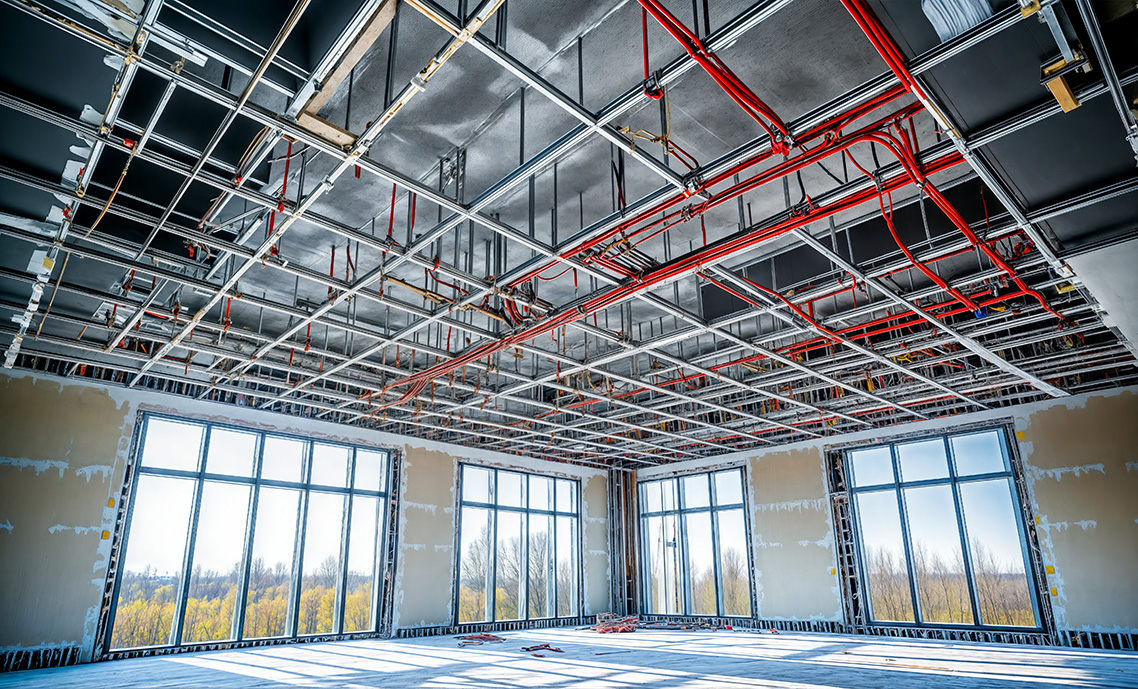
This Circuit Doesn’t Share
Dedicated circuits anchor the reliability of life safety systems by ensuring that critical equipment operates independently from general building loads. This isolation prevents overload, interference, and accidental shutdown caused by unrelated devices, preserving functionality when conditions are most demanding. Whether supplying fire pumps, emergency lighting, smoke control, or override logic, a dedicated circuit provides a stable, uninterrupted power path that supports system survivability during high‑risk events. In both retrofit and new construction, dedicated circuits remain a non‑negotiable requirement for compliance, performance, and life safety continuity.
The following sections detail how dedicated circuits are applied across life safety systems—each scoped for survivability, inspection, and code compliance.
Transition Note
Prior to NEC 2026, many communications and low‑voltage requirements were located in Article 800. These rules now reside across Chapter 7 limited energy articles (725, 760, 770, 805, 820). Any legacy Article 800 references should be interpreted using the updated structure and LE terminology.
1. Dedicated Circuits
Dedicated circuits serve a single system or life‑safety function and are isolated from other loads to prevent interference, overload, or nuisance tripping. They are required for critical systems such as fire alarms, emergency lighting, pumps, and smoke control equipment to ensure survivability and inspection compliance. NEC 2026 does not change the requirement for dedicated circuits but reinforces routing discipline and separation from normal power.
2. Emergency Lighting & Exit Signs
Emergency lighting and exit signs illuminate egress paths during power loss. These systems may use battery units or emergency generator feeds and must maintain operation under fire conditions. Protected routing, labeling, and survivability are required in most non‑residential occupancies. U.S. Codes: NEC 700.10(A) & 700.16, NFPA 101, UL 924. Canada Codes: CEC Section 46, NBC 3.2.7 & 3.4.5, CSA C22.2 No. 141.
3. Fire Alarm Systems
Fire alarm systems detect and notify during fire events and rely on dedicated, protected circuits. Routing must support survivability, firestopping, and separation from other systems. NEC 760.53 and 760.136 define separation rules, and NFPA 72 outlines survivability levels. U.S. Codes: NEC 760, NFPA 72, UL 1424. Canada Codes: CEC Sections 32 & 46, NBC 3.2.4, CAN/ULC‑S524.
4. Fire Pumps
Fire pumps must operate without interruption during fire conditions. They require dedicated emergency feeds, supervised disconnects, and fire‑rated wiring methods when not located in a protected pump room. U.S. Codes: NEC 695, NFPA 20. Canada Codes: CEC Sections 28 & 46, NBC 3.2.5, CSA C282.
5. Smoke Control Systems
Smoke control systems manage air movement to contain or exhaust smoke. They rely on dedicated emergency circuits with protected routing and survivability. Many installations require 2‑hour rated pathways. U.S. Codes: NEC 700.5, NFPA 92. Canada Codes: CEC Section 46, NBC 3.2.8.
6. Firefighter Elevators & Emergency Communication
Firefighter elevators and emergency communication systems must remain operational during fire events. Cabling must be isolated, labeled, and routed through survivable paths. U.S. Codes: NEC 620 & 700, NFPA 101 & 72. Canada Codes: CEC Section 46, NBC 3.2.6 & 3.2.9.
7. Nurse Call, Intercom & Access Control
These limited energy systems support communication and security in healthcare and civic buildings. When tied to emergency power or fire alarm systems, they require dedicated routing, labeling, and separation from high‑voltage circuits. U.S. Codes: NEC 725 & 760. Canada Codes: CEC Sections 16 & 32.
8. Class 2 & Class 3 Emergency Circuits
Class 2 and Class 3 circuits power signaling, control, and communication functions in life‑safety systems. They include mass notification, elevator override logic, annunciators, and other LE emergency functions. NEC 725.136 defines separation requirements. U.S. Codes: NEC 725, UL 1310 & UL 1585. Canada Codes: CEC Section 16, CSA C22.2 No. 223.
9. Cable Management Components
Cable management components provide mechanical support, separation, and identification for dedicated life‑safety circuits. Selection must align with NEC/CEC requirements for survivability, inspection, and emergency system integrity. Painted hardware is a best practice for visual identification but not a code requirement.
Bridle Ring – Steel loop used to support individual cables along structural surfaces.
Cable Identification Tags – Labels affixed to cables or conduit to indicate circuit type, origin, or emergency function.
Conduit Clamps – Rigid fasteners used to secure conduit to walls, ceilings, or structural members.
Fire‑Rated Cable Trays – UL/CSA‑listed trays designed to support grouped circuits while maintaining fire‑rated integrity.
ID Rings – Color‑coded rings applied to cables or conduit for quick visual identification during inspection.
J Hook – Curved support bracket used to route bundled cable runs in open‑air or ceiling spaces.
Mineral Insulated Cable Supports – Specialized brackets or saddles used to secure MI cable in fire‑rated and emergency systems.
Painted Bridle Ring – Bridle ring used to support cable and visually identify dedicated circuits during inspection.
Painted J Hook – J hook that enables quick visual identification of emergency or dedicated cable runs.
Rigid Raceway Support Hardware – Includes strut clamps, beam clamps, and seismic‑rated fasteners used to anchor conduit and raceways.
10. Glossary of Key Terms
AHJ – Authority Having Jurisdiction; the inspector or official responsible for enforcing code compliance.
Class 2 Circuit – Power‑limited circuit defined by NEC 725.
Class 3 Circuit – Higher‑capacity power‑limited circuit defined by NEC 725.
Dedicated Circuit – An isolated electrical path serving only one system or appliance.
Emergency Feed – Power source routed from an emergency panel or generator.
Firestopping – Sealing penetrations in fire‑rated assemblies to prevent the spread of flame, smoke, or gases.
Listed Component – Product tested and approved by a recognized certification body (UL, CSA).
Override Logic – Control logic that allows manual or automatic override during emergencies.
Plenum‑Rated – Cable approved for use in air‑handling spaces; tested to NFPA 262.
Survivability – The ability of a circuit or system to remain operational during fire or fault conditions, often requiring protected routing or fire‑rated components.
Limited Energy (LE) – NEC 2026 terminology replacing “low‑voltage,” covering Class 1, Class 2, Class 3, communications, and fiber circuits under Chapter 7.
Communications Circuit – Defined under NEC 805; includes voice, data, access control, and similar systems.
Optical Fiber Cable – Defined under NEC 770; requires mechanical separation but no electrical separation.
Emergency System – Defined under NEC 700; circuits required to function during fire or power loss.
Legally Required Standby System – Defined under NEC 701; circuits required by code or AHJ for life safety but not classified as emergency systems.
Optional Standby System – Defined under NEC 702; circuits not required for life safety but supported by standby power.
Dedicated circuits anchor the integrity of life safety systems, ensuring that each critical function operates in isolation—uninterrupted, inspectable, and code-compliant when it matters most.
This guide is intended for informational and reference purposes only. It does not supersede local codes, manufacturer specifications, or the judgment of the Authority Having Jurisdiction (AHJ). Installation practices must always be verified against current NEC, ANSI/TIA standards, and site-specific requirements. Winnie Industries products must be installed and used in accordance with official instruction sheets or designated training. Products should never be applied beyond their intended purpose or in a manner that exceeds specified load ratings. Proper fastening is critical to system integrity and functionality, requiring secure attachment to structurally sound components capable of supporting imposed loads. All installations must comply with governing codes, regulations, and job site requirements. Always consult your AHJ for specific regulatory guidance.