

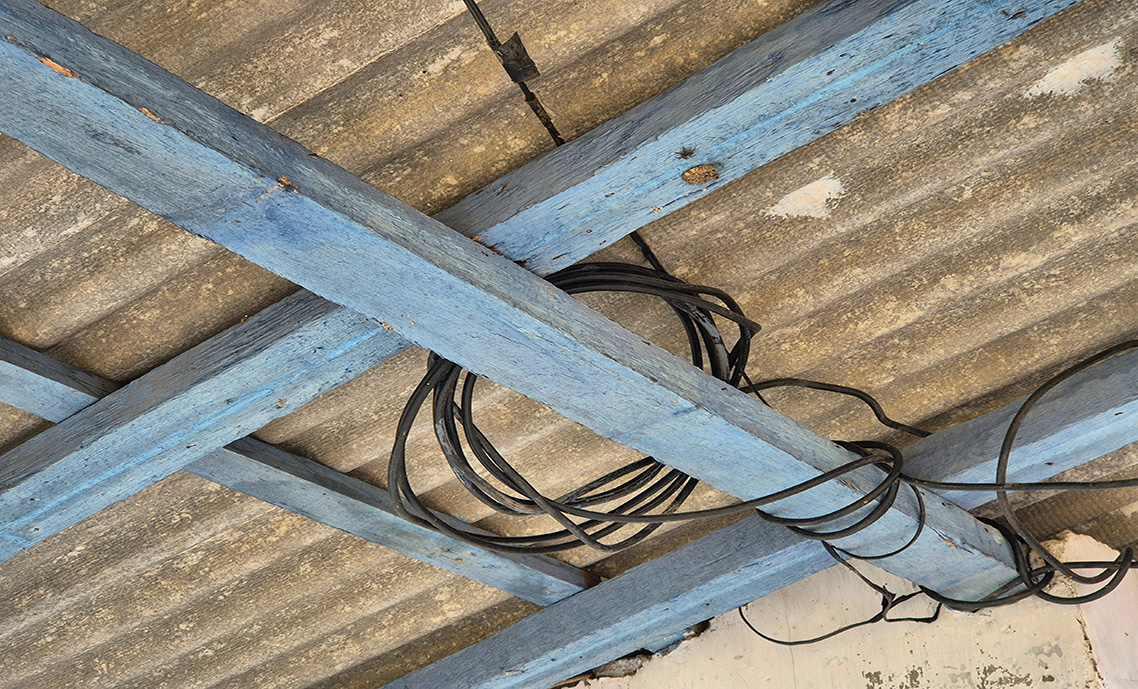
Wiring Where Roofs Bite
Routing cable above a header or beam seems like a convenient shortcut, but it’s one of the most misunderstood areas in low‑voltage installation. Many installers assume the space above the beam is naturally protected, even though roofing screws and nails routinely penetrate deeper and travel more unpredictably than expected. This false sense of security leads to wiring placed in locations where fasteners can easily strike, especially during reroofing.
This FAQ breaks down the common questions installers ask about routing under roof decking and clarifies the practices that keep wiring protected and compliant.
Foundational Understanding
1. Is it safe to run cable above a header or beam under the roof deck?
Running cable above a header is not considered safe because that space sits directly in the path of roofing screws and nails. Fasteners routinely penetrate deeper than expected, especially during reroofing, making wiring placed above the header highly vulnerable. Even minor fastener deviation can result in insulation damage or conductor contact.
2. Why do some installers think above the header is a protected location?
Installers often assume the header acts like a shield, blocking fasteners or creating a natural barrier. In reality, fasteners rarely stop at framing members and frequently pass alongside or through them. This misconception leads to wiring being placed in one of the most exposed areas under the roof deck.
3. Why is the space above the header actually more exposed to fastener damage?
Fasteners driven through the roof deck can angle, wander, or follow soft spots in the decking, placing the area above the header directly in their path. Because this space is tight to the underside of the roof, even slight fastener deviation can result in contact with wiring. The header does not redirect or absorb fastener movement.
4. How do roofing screws and nails typically travel during installation or reroofing?
Fasteners rarely travel straight down; they can shift sideways, follow grain lines, or deflect off decking irregularities. During reroofing, installers often use longer screws and drive them aggressively, increasing penetration depth. This unpredictable movement makes any wiring close to the deck vulnerable.
5. Does framing provide any recognized protection for wiring under the roof deck?
No. Framing members do not provide listed or recognized protection for electrical wiring and cannot be relied on to stop fasteners. Even substantial structural members fail to prevent screws from penetrating nearby areas, leaving wiring exposed to damage.
Practical Routing Guidance
6. What routing method is considered safer under roof decking — above or below the header?
Routing below the header is safer because it increases separation from the fastener path and reduces the likelihood of screws reaching the wiring. This lower position also provides more predictable spacing, making it easier to maintain safe clearance throughout the run.
7. How should wiring be routed when the header or beam is tight to the roof deck?
When clearance is limited, wiring should be routed below the header or shifted laterally to maintain safe separation. If spacing cannot be achieved due to structural constraints, protected wiring methods should be used. The goal is to avoid any location where fasteners are likely to penetrate.
8. What installation practices help maintain safe spacing under roof decking?
Installers should avoid tight-to-deck routing, keep wiring below framing members, and maintain consistent separation from the roof deck. Using straps or supports to control cable position helps prevent accidental contact with the deck. Planning the route before installation reduces the need for risky adjustments later.
9. What mistakes do installers commonly make when routing near roof decking?
Common mistakes include running cable directly against the roof deck, placing wiring above headers, and assuming framing provides protection. Another frequent error is routing wiring through areas where fasteners are likely to penetrate during reroofing. These mistakes often stem from trying to “hug the deck” to save time or avoid rerouting.
10. When should protected wiring methods like RMC or IMC be used instead of standard cable?
Protected wiring methods should be used when spacing cannot be maintained or when wiring must pass through areas directly exposed to fastener penetration. RMC and IMC provide physical protection that standard cable cannot. They are also appropriate when structural constraints eliminate safe routing alternatives.
Code & Best Practice
11. How does reroofing affect wiring routed near headers and beams?
Reroofing increases the risk of damage because installers often use longer fasteners and drive them aggressively to secure new materials. Fasteners may penetrate deeper or at different angles than during the original installation. Wiring placed near the roof deck is far more likely to be struck during this process.
12. Is this routing question addressed by electrical code?
Yes. Electrical code directly addresses wiring installed under roof decking, including the spacing and protection requirements that apply when fasteners may penetrate the area. NEC 300.6(E) specifically covers the minimum separation needed to keep wiring out of the fastener path and identifies when protected wiring methods must be used. These rules exist to prevent concealed damage that may not be discovered until a failure occurs, especially after reroofing or deck replacement.
13. What is the recommended best practice for wiring under roof decking?
The best practice is to route wiring below headers and maintain consistent separation from the roof deck. When spacing cannot be achieved, protected wiring methods should be used to ensure long-term safety and reliability. This approach minimizes the risk of fastener contact and supports compliant, durable installations.
Clear routing, proper spacing, and the right protection methods ensure wiring stays safe, compliant, and out of the fastener path for the life of the building.
The information provided in this FAQ is for general informational purposes only and is not intended to replace official codes, standards, or project specifications. Winnie Industries products must always be installed and used in accordance with our product instruction sheets or designated training. Products should never be applied beyond their intended purpose or in a manner that exceeds specified load ratings. Proper fastening is critical to system integrity and functionality, requiring secure attachment to structurally sound components capable of supporting imposed loads. All installations must comply with governing codes, regulations, and job site requirements. Always consult your Authority Having Jurisdiction (AHJ) for specific regulatory guidance.