

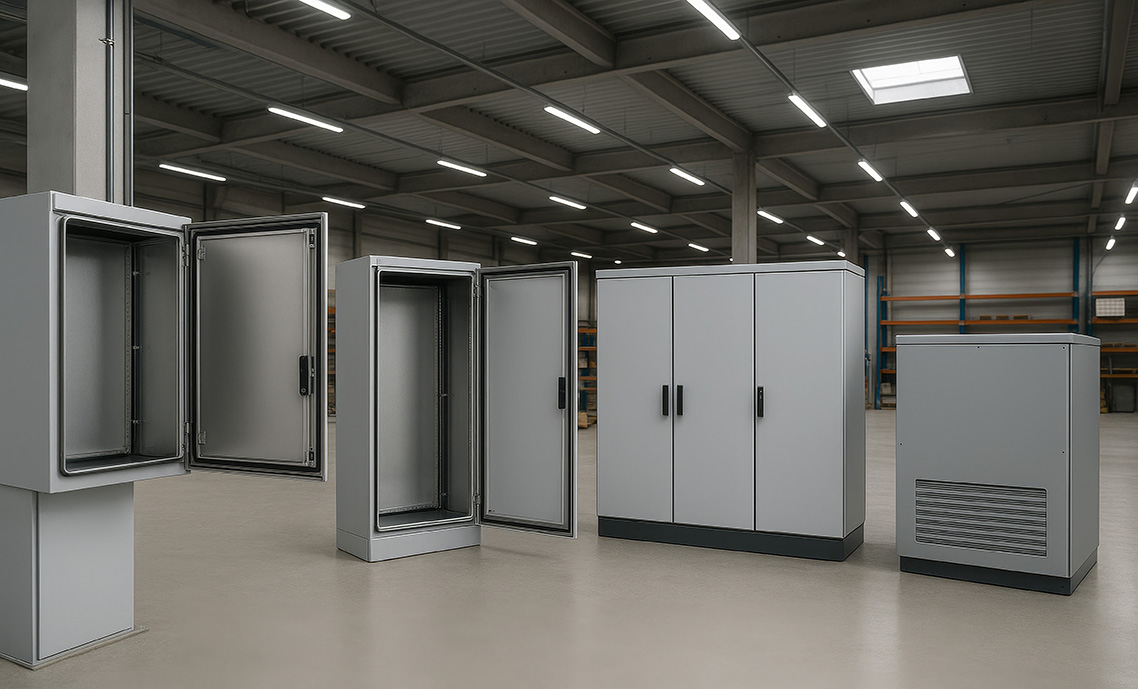
Right Box. Right Rating. Right Results.
Choosing the correct NEMA enclosure isn’t just a spec‑sheet decision — it’s the difference between equipment that performs reliably and equipment that fails early. Every environment introduces its own challenges, from dust and debris to washdown pressure and corrosive exposure, and the enclosure is the first line of defense. Understanding how NEMA ratings work ensures that electrical panels, controls, and terminations stay protected, compliant, and serviceable over the long term.
Before diving into installation best practices, it’s important to understand where NEMA boxes are used and how each rating is designed to perform.
1. What a NEMA Box Is
What It Is: A NEMA box is an electrical enclosure designed to protect internal components such as breakers, controls, terminations, and low‑voltage equipment from environmental hazards and accidental contact.
Why It Matters: Understanding the purpose of the enclosure ensures it’s installed correctly and not compromised by overcrowding, improper routing, or modifications that reduce protection.
Best Practice: Treat the enclosure as a protective system. Maintain its structural integrity, use proper fittings, and avoid unnecessary penetrations or alterations that weaken its environmental rating.
2. Where NEMA Boxes Are Used
What It Is: Steel NEMA enclosures are used across commercial and industrial environments, including machinery, production lines, mechanical equipment, workstations, and industrial control panels.
Why It Matters: Knowing the application context helps determine cable approach paths, environmental exposure, and the level of protection required for safe, compliant installation.
Best Practice: Evaluate the surrounding environment—heat, moisture, dust, vibration, and accessibility—to determine how conductors should enter, exit, and be supported around the enclosure.
3. Understanding NEMA Ratings
What It Is: NEMA ratings define how well an enclosure protects internal components from dust, water, corrosion, and other environmental conditions.
Why It Matters: Using the wrong rating—or compromising the enclosure during installation—can lead to water intrusion, corrosion, overheating, equipment failure, or code violations.
Best Practice: Match the enclosure rating to the environment and maintain that rating throughout installation. Use compatible fittings, preserve gasket integrity, and avoid routing practices that reduce protection.
4. NEMA 1 – Indoor, Clean, Dry Locations
What It Is: NEMA 1 enclosures are basic indoor housings designed for clean, dry environments with no exposure to water or excessive dust.
Why It Matters: They provide only minimal protection. Using NEMA 1 outdoors or in damp or dusty areas can lead to equipment damage or unsafe conditions.
Best Practice: Use NEMA 1 only in controlled indoor spaces such as utility rooms, closets, and interior electrical panels. Do not install them where moisture or airborne debris is present.
5. NEMA 12 – Dusty or Dirty Indoor Areas
What It Is: NEMA 12 enclosures are designed for indoor environments with dust, lint, fibers, or airborne debris.
Why It Matters: Dust infiltration can cause overheating, arcing, or premature equipment failure. NEMA 12 prevents particulate intrusion but is not intended for outdoor use.
Best Practice: Use NEMA 12 in warehouses, factories, and industrial automation areas. Ensure all openings are sealed and avoid using these enclosures outdoors or in wet environments.
6. NEMA 3R – Outdoor Rain and Sleet Protection
What It Is: NEMA 3R enclosures are designed for general outdoor use where rain, sleet, and snow are present.
Why It Matters: They provide weather protection but do not guard against hose‑directed water or corrosion unless built from treated materials.
Best Practice: Use NEMA 3R for outdoor breaker panels, disconnects, meter mains, and service equipment. Avoid using them in washdown areas or corrosive environments.
7. NEMA 4 – Washdown and Hose-Directed Water
What It Is: NEMA 4 enclosures are watertight housings designed to withstand splashing and hose‑directed water.
Why It Matters: They protect equipment in wet or washdown environments but are not inherently corrosion‑resistant unless made from specific materials.
Best Practice: Use NEMA 4 in commercial kitchens, food processing, car washes, and wet industrial areas. Verify material compatibility when corrosion is a concern.
8. NEMA 4X – Corrosion-Resistant Harsh Environments
What It Is: NEMA 4X enclosures offer all the protection of NEMA 4 with added corrosion resistance from stainless steel, fiberglass, or non‑metallic materials.
Why It Matters: Corrosive environments can rapidly degrade standard enclosures, leading to failures, safety hazards, and costly downtime.
Best Practice: Use NEMA 4X in coastal, chemical, wastewater, and food‑processing environments. Select materials based on exposure to salt, chemicals, or frequent washdowns.
9. How to Choose the Right NEMA Enclosure
What It Is: Selecting the correct enclosure involves evaluating environmental exposure, installation location, and the type of equipment being protected.
Why It Matters: Choosing the wrong rating can result in water intrusion, corrosion, dust contamination, or non‑compliance with electrical codes.
Best Practice: Determine whether the enclosure will be indoors or outdoors, exposed to dust or washdown, or subjected to corrosive conditions. Match the rating to the environment and never downgrade protection for convenience.
10. Cable Entry and Bend Radius
What It Is: Cable entry refers to how conductors transition into the enclosure. Bend radius is the minimum curvature a cable can maintain without stress.
Why It Matters: Improper entry or tight bends can deform insulation, strain terminations, and reduce cable lifespan.
Best Practice: Use proper fittings, maintain manufacturer‑recommended bend radius, and ensure strain relief is established outside the enclosure so the box does not support cable weight.
11. Strain Relief at the Enclosure
What It Is: Strain relief prevents the enclosure and terminations from bearing the weight or tension of the cable run.
Why It Matters: Unsupported cables can pull on terminations, loosen connections, and compromise the enclosure’s environmental rating.
Best Practice: Support cables before they enter the enclosure. Use appropriate clamps, supports, or routing methods to eliminate tension at the entry point.
12. Internal Wire Organization and Separation
What It Is: Internal organization involves routing, dressing, and separating conductors inside the enclosure.
Why It Matters: Crowded or disorganized wiring increases heat buildup, complicates troubleshooting, and raises the risk of abrasion or interference.
Best Practice: Separate high‑voltage, low‑voltage, control, and communication conductors. Keep wiring clear of hinge lines, sharp edges, and moving components.
13. Protecting Conductors From Abrasion and Movement
What It Is: Abrasion occurs when conductors rub against edges or components. Movement results from vibration, door operation, or thermal expansion.
Why It Matters: Even minor rubbing can wear through insulation over time, creating unsafe conditions or intermittent faults.
Best Practice: Use grommets, bushings, and approved supports to prevent rubbing or shifting. Deburr all edges and secure conductors to prevent movement.
14. Maintaining Serviceability Inside the Enclosure
What It Is: Serviceability refers to how easily the enclosure can be opened, inspected, and worked on.
Why It Matters: Poor routing or overcrowding can block access to breakers, terminals, or components, increasing downtime and safety risks.
Best Practice: Maintain slack where needed, avoid blocking critical components, and route wiring so the enclosure can be opened safely without strain on conductors.
15. Managing External Cable Runs Leading Into the Box
What It Is: External cable management covers how conductors are routed and supported before entering the enclosure.
Why It Matters: Unsupported or poorly routed external runs place strain on the entry point and can compromise the enclosure’s rating.
Best Practice: Support and route cables cleanly along nearby structures. Protect external runs from vibration, abrasion, and environmental exposure.
16. Preserving the Enclosure’s Environmental Integrity
What It Is: Environmental integrity refers to the enclosure’s ability to maintain its rated protection level after installation.
Why It Matters: Improper fittings, missing gaskets, or unsealed penetrations can downgrade the enclosure and expose equipment to hazards.
Best Practice: Use only rated fittings, seal unused openings, preserve gasket compression, and verify that all penetrations maintain the enclosure’s NEMA rating.
Together, these practices ensure every enclosure performs as intended, no matter where it’s installed.
This guide is intended for informational and reference purposes only. It does not supersede local codes, manufacturer specifications, or the judgment of the Authority Having Jurisdiction (AHJ). Installation practices must always be verified against current NEC, ANSI/TIA standards, and site-specific requirements. Winnie Industries products must be installed and used in accordance with official instruction sheets or designated training. Products should never be applied beyond their intended purpose or in a manner that exceeds specified load ratings. Proper fastening is critical to system integrity and functionality, requiring secure attachment to structurally sound components capable of supporting imposed loads. All installations must comply with governing codes, regulations, and job site requirements. Always consult your AHJ for specific regulatory guidance.